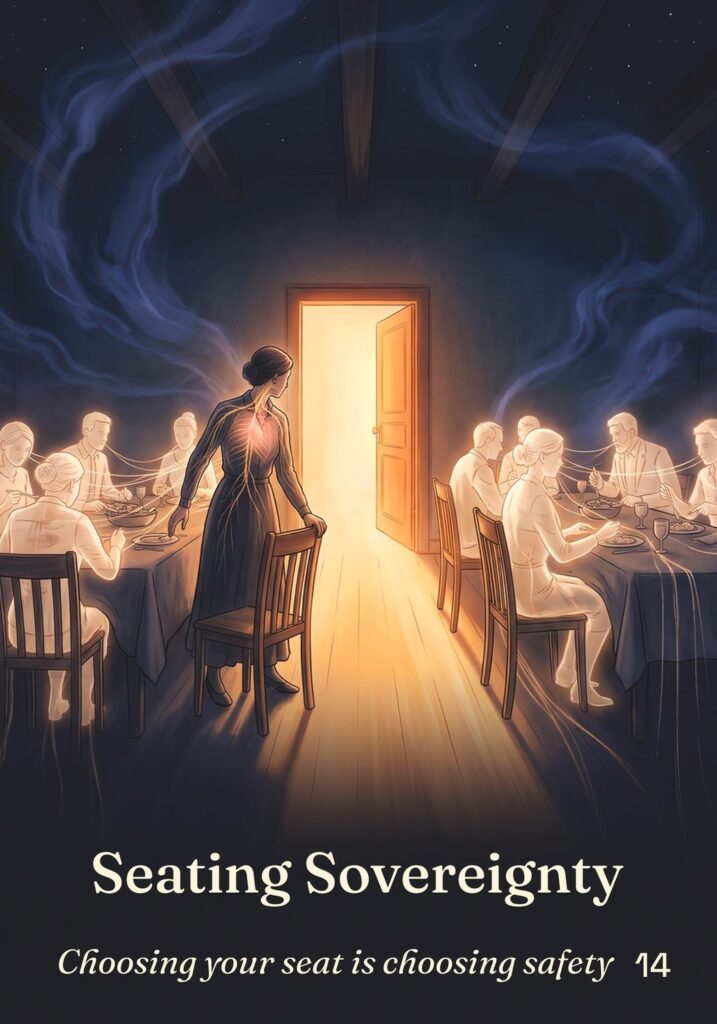
What Seating Sovereignty means
Where you sit can quietly shape how safe you feel all evening, and feeling cornered by a difficult relative is not pettiness but your body reading a blocked exit as danger. Beneath conscious thought, your brain is always checking a space for possible exits and clear sightlines. A seat where you can see the door and do not feel boxed in lowers that background alarm before it builds.
In a reading, Seating Sovereignty tends to show up with a very practical question underneath: where will I sit? It sounds small. At a Thanksgiving table with a long history, it rarely is. Year after year the person ends up wedged between two relatives who talk across them, or stuck at the far end with their back to the door, or seated beside someone who drinks too much. I read the card as a permission slip. Choosing your seat is a reasonable act of care, and the body's discomfort with being boxed in is worth listening to.
Where it goes wrong is treating the seat as a fortress to defend, so the evening becomes a strategy game instead of a meal. I have seen someone spend the hour before dinner calculating every chair and then feel defeated when a cousin sits in the planned spot. The card asks for a reasonable choice, not a perfect one. Often the best seat is simply one with a clear view of the door and a little room on either side. If that seat is taken, a move later in the evening is also allowed.
I place myself where I feel safe
When Seating Sovereignty appears in a reading
When this card shows up, I ask the person to picture the usual table and point to the seat they dread. Then I ask what it is about that seat. Sometimes it is a person, sometimes it is the corner, sometimes it is the view of a doorway where someone reliably appears with a comment. The reading treats each answer differently. A difficult neighbor might mean a quiet word with the host. A trapped corner might mean arriving early to choose. The point is that the seat is not destiny.
In practice I use the card before anyone sits down. I look for a spot where I can see the door and do not feel boxed in, and I head toward it early, before the rush to the table begins. If seating is assigned, I ask the host quietly whether I can switch, without turning a small request into a long explanation. If I end up somewhere that does not work, I let myself shift between courses rather than enduring the whole meal.
Beside Sovereign Chair, I read the pair as the seat chosen and then inhabited: first where, then how. Beside The Escape Hatch, the reading says the exit should be visible because the urge to leave may arrive. Where I keep Seating Sovereignty distinct from Generous Boundary is how much is said. Seating Sovereignty protects you quietly, through placement. Generous Boundary uses words, a short line said out loud when you need space.
One small move for the table
Arrive a few minutes early so you can help set the table, which gives you a natural say in where the place cards or plates end up.
Seating Sovereignty in the Ladder Spread
The Table of Connection guidebook’s three-card spread is The Ladder, for a specific trigger or a gathering that already has you tangled. Laid left to right, it moves one situation from raw reaction toward regulated response: notice what the body is doing, name the state, then check what is true now and choose a practice. In each position this card tends to say:
- Notice. As the Notice card, Seating Sovereignty points at a body that feels cornered, by a chair, a wall, or the person beside you.
- Name. In the Name position, the state is feeling cornered, a body uneasy about a blocked exit, which is not pettiness about seating.
- Check and Regulate. In Check and Regulate, it asks whether you can actually leave if you need to, and suggests a seat with a view of the door to lower the alarm.
Journal prompts
- Where do I feel trapped at this table?
- What seat would let me breathe easier?