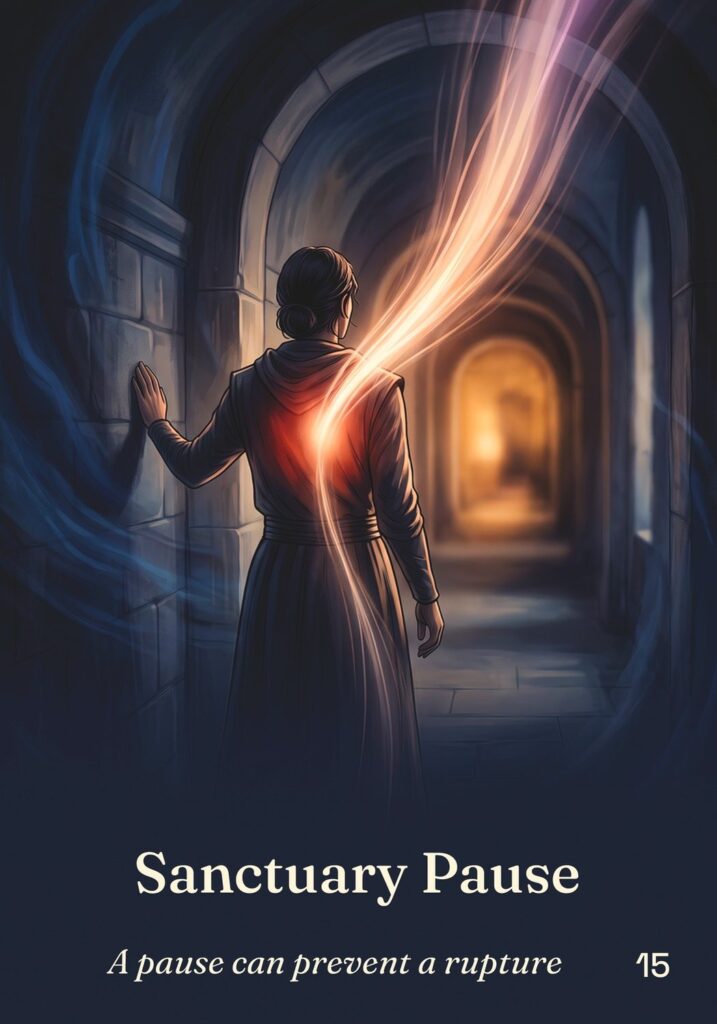
What Sanctuary Pause means
Stepping out of the room for a moment is not the same as running away, and a brief, deliberate pause can keep rising tension from hardening into a rupture. When friction escalates, the vagal brake on your heart lets go and arousal climbs, but a clear physical signal can help re-engage it. Cool water over your hands and wrists can offer that kind of quick reset before you return.
In a reading, Sanctuary Pause describes a moment right before a rupture. The person can feel it coming: voices rising, an old topic surfacing, their own temper starting to heat. They might feel trapped between two bad choices, stay and explode or leave and look rude. I read the card as a third option. A short, deliberate break is neither. It is a way to step out of the current for a couple of minutes and come back with a cooler body, before the words that cannot be taken back have a chance to arrive.
Where it goes wrong is taking the pause and never coming back, so a reset becomes a disappearance that someone else has to explain. Ten minutes in the bathroom turns into forty minutes on the porch scrolling a phone, and by the time the person returns the table has made up a story about why. The card's pause is short on purpose. Two minutes, maybe five. Long enough to change the body, short enough that the room barely notices. If you need longer, that is useful information too, and it may point toward The Gentle Exit instead.
I step away to steady myself
When Sanctuary Pause appears in a reading
Most people have a signal right before they snap, and finding it is where this card begins. Some name heat in the face. Some name a tightness in the throat or a pressure behind the eyes. The answer becomes their signal. The reading then asks them to agree with themselves, in advance, that when that signal arrives they will take a short break. Making the agreement before the gathering matters, because in the moment the mind is very good at arguing for staying and fighting.
My practice with the card is to slip away for a couple of minutes and run cool water over my hands and wrists at a bathroom sink. I let it run until I can feel the cold clearly, and I breathe slowly while I do it. Then I dry my hands, look at myself in the mirror for a moment, and go back. Nobody needs a reason for a short bathroom trip, which is why this works at almost any table. The cold gives the body a clear, simple signal to settle.
Beside Generous Boundary, I read the pair as the words and the act of stepping away, said and then done. Beside The Micro-Repair, the reading says the pause comes first and the repair comes after, when you have the steadiness for it. Where I keep Sanctuary Pause distinct from The Escape Hatch is the kind of energy involved. Sanctuary Pause is for rising friction that needs cooling. The Escape Hatch is for a flood of urge to run that needs movement to pass through.
One small move for the table
Before the gathering, find out where the quietest bathroom or side room is, so you know exactly where your pause will happen.
Sanctuary Pause in the Ladder Spread
The Table of Connection guidebook’s three-card spread is The Ladder, for a specific trigger or a gathering that already has you tangled. Laid left to right, it moves one situation from raw reaction toward regulated response: notice what the body is doing, name the state, then check what is true now and choose a practice. In each position this card tends to say:
- Notice. As the Notice card, Sanctuary Pause points at rising tension, a heat in the face or a tightening in the throat, the moment before something breaks.
- Name. In the Name position, it names that moment as arousal climbing and the brake on your heart letting go, not a failure of self-control.
- Check and Regulate. In Check and Regulate, it asks whether this conflict needs to happen right now, and offers a short break with cool water as a way to reset first.
Journal prompts
- When did I last let myself pause?
- What rises in me just before conflict?