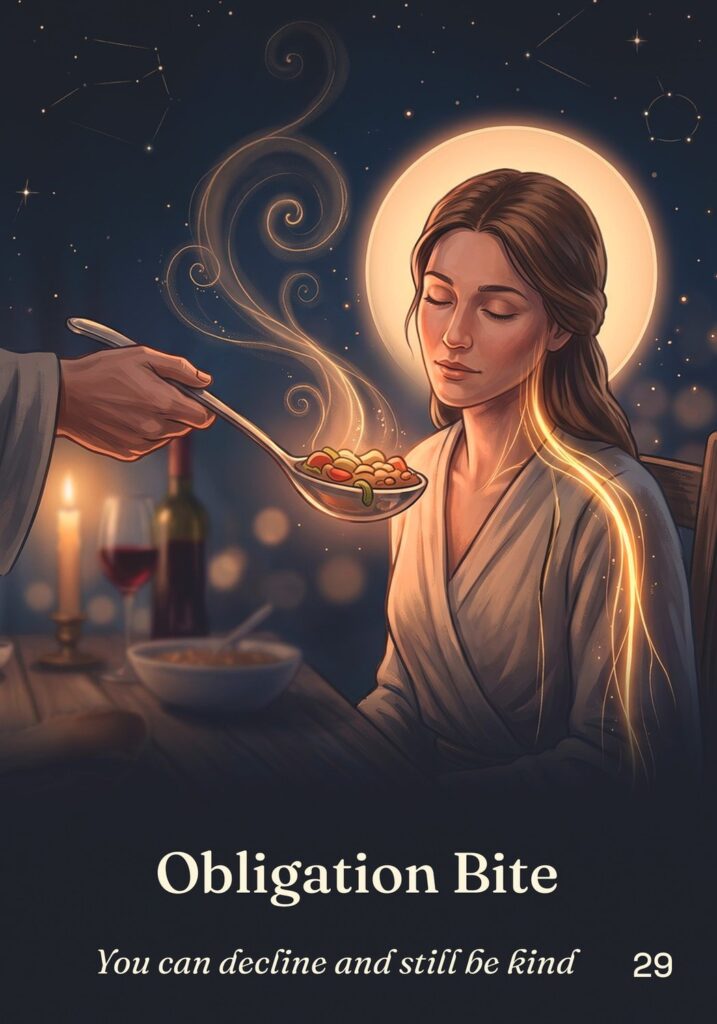
What Obligation Bite means
Eating the extra serving you did not want can feel easier than risking a host's disappointment, and that reflex to appease is old, deeply wired, and often invisible. The fawn response works by soothing other people to keep yourself safe, often at a quiet cost to your own needs. A warm, unhurried decline honors your actual fullness without rupturing the connection you care about.
In a reading, Obligation Bite tends to describe the second helping that nobody wanted. The host is beaming, the serving spoon is hovering, and saying no feels like it might hurt someone's feelings. So the person says yes, eats past full, and then feels uncomfortable for the rest of the night. Thanksgiving is practically built around this moment. I read the card as recognition of how deep the urge to please runs, and how easily it overrides the body's own signals in the name of keeping everyone happy.
Where it goes wrong is turning a simple refusal into a confrontation, or saying yes so often that your own fullness stops counting. A kind no can still disappoint someone, and that does not make it the wrong answer; a sharp one, though, can rupture the warmth the person cares about. Constant agreement erodes the person's trust in their own body. The card asks for a decline that is warm and unhurried and does not apologize for the body's own signal. You can appreciate the cooking and honor your fullness. Neither has to come at the expense of the other.
I honor my fullness with warmth
When Obligation Bite appears in a reading
When this card shows up, I ask the person where else they appease others at the expense of their own needs. Food is often the most visible place, but it is rarely the whole story. Agreeing to stay longer, taking on chores they did not want, nodding along to opinions they disagree with. The reading sees the second helping as one example of a wider pattern. Practicing a warm no at the table can make it easier to practice in other places too. For some people the plate is a gentle place to start, because the moment comes around several times in one evening. For others, with a harder history around food, it is not low stakes at all, and a different place to practice is the better choice.
My practice with the card is to rest my hands in my lap when the extra serving comes around and say warmly, "I'm fully satisfied, thank you." I do not add an explanation about diets or how much I already ate. I just let the sentence stand. If the host insists, I say it again, the same way. Most hosts accept it the second time. If someone is truly hurt, I compliment the food sincerely, which is usually what they wanted to hear anyway.
Beside Generous Boundary, I read the pair as two kinds of warm no, one for tasks and one for food. Beside The Satiety Cue, the reading suggests checking in with fullness before the serving spoon even arrives. Where I keep Obligation Bite distinct from Nourishment Beyond is who the eating is for. Obligation Bite is eating to please someone else. Nourishment Beyond is eating to fill a hunger that food cannot satisfy.
One small move for the table
Ask for a small container to take a favorite dish home, which honors the host's cooking without requiring you to eat it tonight.
Obligation Bite in the Ladder Spread
The Table of Connection guidebook’s three-card spread is The Ladder, for a specific trigger or a gathering that already has you tangled. Laid left to right, it moves one situation from raw reaction toward regulated response: notice what the body is doing, name the state, then check what is true now and choose a practice. In each position this card tends to say:
- Notice. As the Notice card, Obligation Bite points at food you did not want, eaten past full to avoid disappointing someone.
- Name. In the Name position, it names that reflex as an old urge to appease, soothing others to keep yourself safe.
- Check and Regulate. In Check and Regulate, it asks whether declining would actually rupture anything, and offers a warm, unhurried no thank you as the way through.
Journal prompts
- What am I doing just to please others?
- Where does appeasing cost me the most?