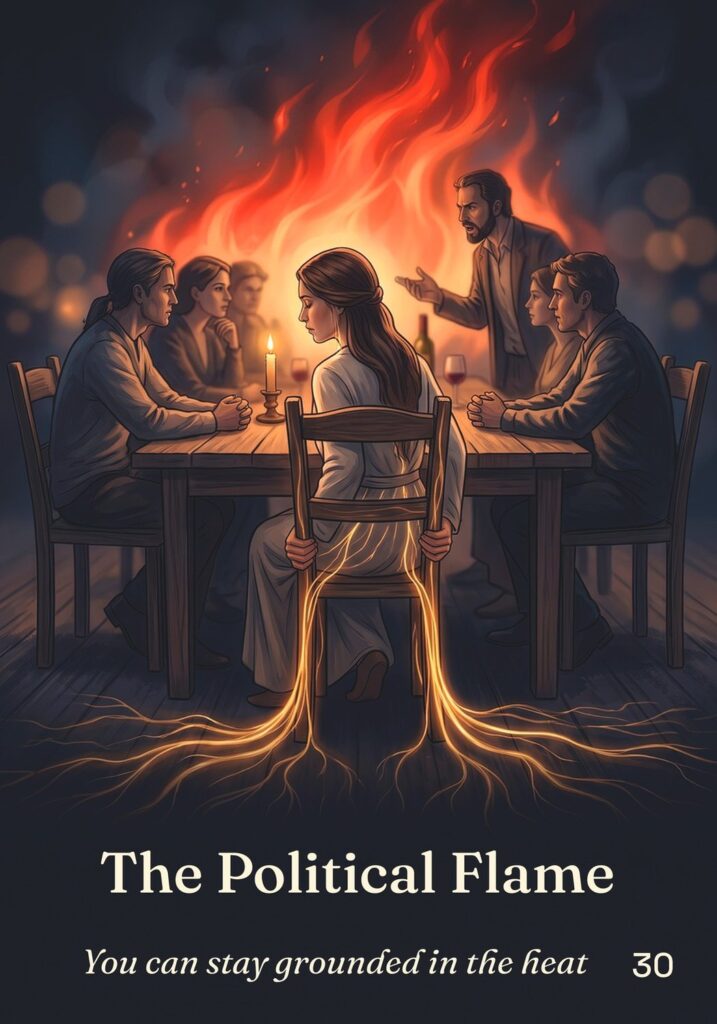
What The Political Flame means
A conversation can catch fire before anyone consciously chooses it, and when it turns into an argument, bodies flood with heat far faster than reason can catch up. High arousal narrows your thinking and primes the fight response, so the angrier the room gets, the fewer real options you can see. A firm grip on the seat of your chair anchors you in your body long enough to choose your next move.
In a reading, The Political Flame tends to describe a familiar fear: the moment someone at the Thanksgiving table brings up an election, a news story, a policy, a candidate. The air changes. Voices rise. People who love each other start saying things they would never say on any other day. I read the card as recognition of how fast that heat spreads, and how little thinking survives it. The card is not about who is right. It is about staying in your own body long enough to choose how you want to respond.
Where it goes wrong is swallowing every opinion to keep the peace, or treating the table as a stage for winning the argument at any cost. Silence can feel safe, but it can also leave the person resentful and unseen. Fighting to win can feel righteous, but it usually leaves everyone more entrenched and the meal ruined. The card does not choose between speaking and silence. It asks for an anchor first, so that whatever the person chooses comes from a grounded place rather than a flood of heat.
I anchor myself before I react
When The Political Flame appears in a reading
When this card shows up, I ask the person what the argument is really about for them. Not the policy. The feeling underneath. Often it is about being respected, or being heard, or about a relationship that feels strained in other ways. Knowing what is underneath helps the person decide whether this argument is worth having. Sometimes the answer is yes, and they can enter it more calmly. Sometimes the answer is no, and they can step back without feeling like they lost.
Under the table, when a debate flares, I grip the seat of my chair firmly with both hands and feel myself anchored in my body before choosing whether to speak. The grip is hidden under the table, so nobody notices. I hold it for a few breaths and let the heat in my chest settle a little. Then I decide. Sometimes I say my piece calmly. Sometimes I change the subject or say, "Let's talk about this another time."
Beside Armor of Critique, I read the pair as heat from two sources, comments about you and debates about the world. Beside The Prosodic Voice, the reading suggests warming the tone before entering any argument. Where I keep The Political Flame distinct from Intergenerational Echo is how old the fire is. The Political Flame is about current events that flare in the moment. Intergenerational Echo is about arguments that have been passed down for generations.
One small move for the table
Before the gathering, decide one topic you will not discuss this year and one easy topic you can steer toward, such as a shared memory or a favorite recipe.
The Political Flame in the Ladder Spread
The Table of Connection guidebook’s three-card spread is The Ladder, for a specific trigger or a gathering that already has you tangled. Laid left to right, it moves one situation from raw reaction toward regulated response: notice what the body is doing, name the state, then check what is true now and choose a practice. In each position this card tends to say:
- Notice. As the Notice card, The Political Flame points at a conversation catching fire, bodies flooding with heat faster than reason can catch up.
- Name. In the Name position, the state is a fight-ready heat that narrows the options you can see.
- Check and Regulate. In Check and Regulate, it asks whether this argument needs to happen now, and offers a firm grip on your chair as an anchor before choosing to speak.
Journal prompts
- What is this argument really about for me?
- How do I want to leave this exchange?