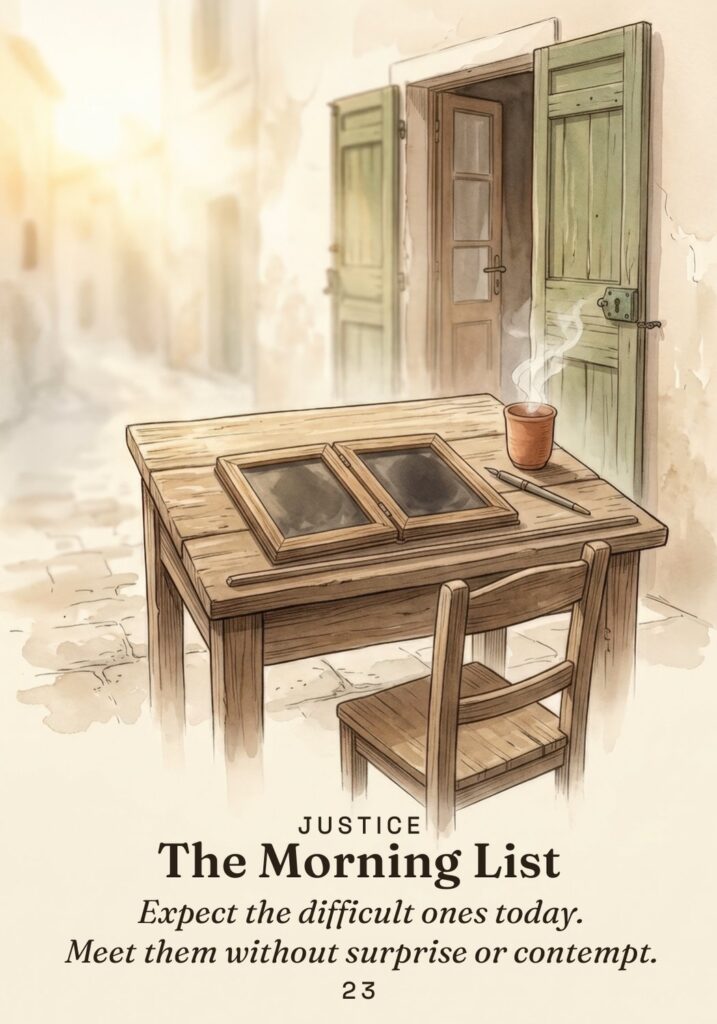
What The Morning List means
"Begin the morning by saying to thyself, I shall meet with the busy-body, the ungrateful, arrogant, deceitful, envious, unsocial," Marcus writes (Meditations 2.1, tr. Long), and then, astonishingly, he goes to work with them anyway, because they are his people and he is theirs. Expecting difficulty is not cynicism. It is what lets you meet it without surprise, and without contempt.
In a reading, The Morning List tends to turn up for someone who has been blindsided by the same person more than once. The colleague who has undermined them in meeting after meeting. The relative whose calls keep turning into complaints. The person is not surprised by the behavior anymore, and yet they still arrive unready, still get knocked sideways, still spend the afternoon replaying it. I read the card as a question about preparation, not about the other person. The difficulty is forecast. The person keeps leaving the house without a coat.
Where it goes wrong is turning the forecast into a verdict. The list is meant to remove surprise, and in the wrong hands it removes mercy instead. The person wakes up, names the difficult ones, and by the first meeting has already convicted them, so that any decent moment goes unnoticed and any bad one is confirmation. That is not Stoic preparation. It is prejudice with a philosophical label. The card asks for expectation without contempt, and contempt is the easier of the two to fall into when the forecast keeps coming true.
I can expect difficulty and still offer decency.
When The Morning List appears in a reading
If you draw this card, start with who is on your list, and then sit with the harder question: what do you usually do in the first ten seconds after that person does the expected thing? The honest answer is rarely pretty. A tightening, a sarcastic reply, a long silence that everyone can read. That ten-second reaction is what the card is actually about. The other person's pattern is the weather you forecast. Your reaction is the one part of the morning that could go differently, and the forecast is about the pattern, not a verdict on the person.
In practice I keep the morning list short and I keep it kind. One name, one likely friction, one sentence I am willing to say when it arrives, decided over coffee while nothing is happening. The sentence is usually dull on purpose: "I hear you, and I'm going to stick with the plan." I say it under my breath once so my mouth knows it. If I cannot decide the tone while calm, I do not trust the one I will pick when provoked. Some mornings the friction never comes, and that is not a wasted rehearsal. It is a quiet day.
Beside The Other Mind, I read the pair as expectation followed by understanding: the first card says they will be difficult, the second asks why. Beside Kindness Unfeigned, the reading warns that preparedness can harden into performance, and asks for the decency to be real. Where I keep The Morning List distinct from The Rehearsal is scale. The Rehearsal walks through a feared event, something large and possible. The Morning List is for the small certain frictions, the ones that have a name and a time slot.
One small move on your side of the line
Write the one sentence you plan to say to the most predictable difficult person on your calendar, and read it aloud once before you leave the house.
The Morning List in the Dichotomy Spread
The Stoic Oracle guidebook’s three-card spread is The Dichotomy Spread, for any situation that will not stop churning: a conflict, a waiting game, a decision that circles. Laid left to right, it sorts the situation along the one line the Stoics trusted: what is yours, what is not, and the next right act. In each position this card tends to say:
- What Is Yours. In the What Is Yours position, The Morning List points at your tone and your first ten seconds, which are the part of the encounter you get to prepare.
- What Is Not. In the What Is Not position, it names the other person's pattern, which they may or may not change today and which was never yours to correct before breakfast.
- The Next Right Act. As The Next Right Act, it is deciding your response while calm, in one plain sentence, before the day has a chance to decide it for you.
Journal prompts
- Who surprised me today exactly the way they always do?
- What does my contempt cost me that my patience would not?