Use this spread when
I reach for this one when a situation has been running in the background for days and every pass through it ends in the same place. A conflict with someone who will not budge, a reply I am waiting on, a choice that keeps circling back to the start. The churn is usually a sign that I have been working hard on a part of it I cannot move. The spread does not solve the situation. It draws a line through it, so I can see which side my effort has been landing on and move one small piece of it back to my own column.
How to lay it
- Hold the question loosely. "What is going on with this situation?" works better than "How do I make them change their mind?"
- Shuffle and lay three cards face down, left to right.
- Turn What Is Yours and write down the piece it points at in one line, in words that start with I.
- Turn What Is Not and name what you have been carrying that belongs to someone or something else. Write it, then put the pen down for a breath.
- Turn The Next Right Act last and choose one move you can finish before the day ends. Do it before you reread the second line.
What each position means
- 1What Is YoursWhich piece of this genuinely belongs to me?
The piece of this situation that genuinely belongs to you: your judgment, your effort, your next act. I read this card as a pointer to something I can touch today. It is often smaller and plainer than I expect, which is part of why it gets overlooked while the bigger, unmovable parts take all the attention.
- 2What Is NotWhat have I been carrying that was never mine?
The piece you have been carrying that was never yours: the outcome, the other person, the timeline. This position is not a verdict that those things do not matter. They can matter a great deal. The card asks me to notice how much of my effort has gone there, and to stop treating worry as if it were a form of work.
- 3The Next Right ActWhat one small move keeps me on my side?
The one small move that puts your effort entirely on your own side of the line. I keep it small enough to finish, because a plan with ten steps tends to drift back into the other column by step three. If the card suggests something bigger, I take the first piece of it and let that be enough for now.
A worked example with Stoic Oracle
Here is how the spread reads with three cards from The Stoic Oracle. Ten days after a final interview, with no word either way, the waiting has started to run my evenings. Suppose I am wondering what is going on with this waiting game, and the three cards are Plain Speech, This Hour Only, and Little by Little.
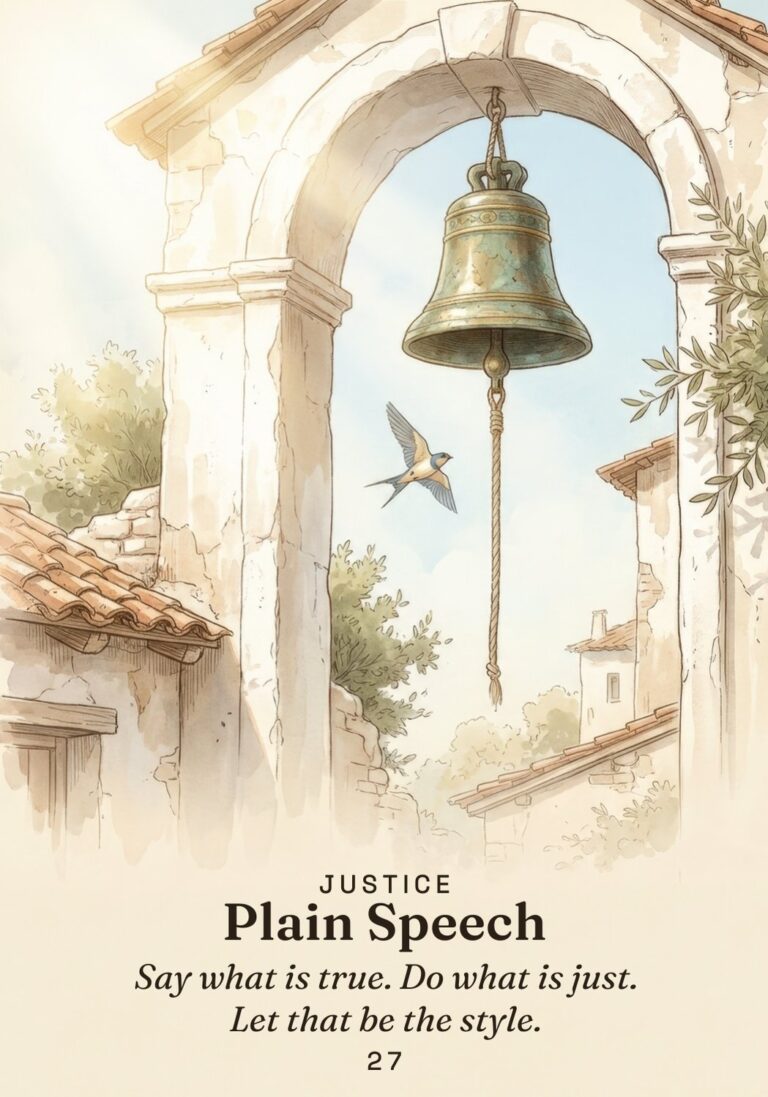
1 · What Is Yours
Say what is true. Do what is just. Let that be the style.
What Is Yours lands on my words. I have drafted four versions of a follow-up note, each one either too eager or too cool, and sent none of them. The card says the true sentence is usually short: I am still interested, and I would like to know where things stand. Its edge is that plain does not mean blunt, so the note stays friendly instead of sounding like a demand.

2 · What Is Not
You cannot lose the past or the future. Only this hour is yours.
What Is Not is the decision itself and its timeline. That answer lives in a future I do not own yet, moving through people and calendars I will never see, and checking my inbox every hour spends the hour I do own on a rumor. The card's other edge keeps me honest: I do not have to police every stray thought about the job into silence. I just stop handing it the whole evening.
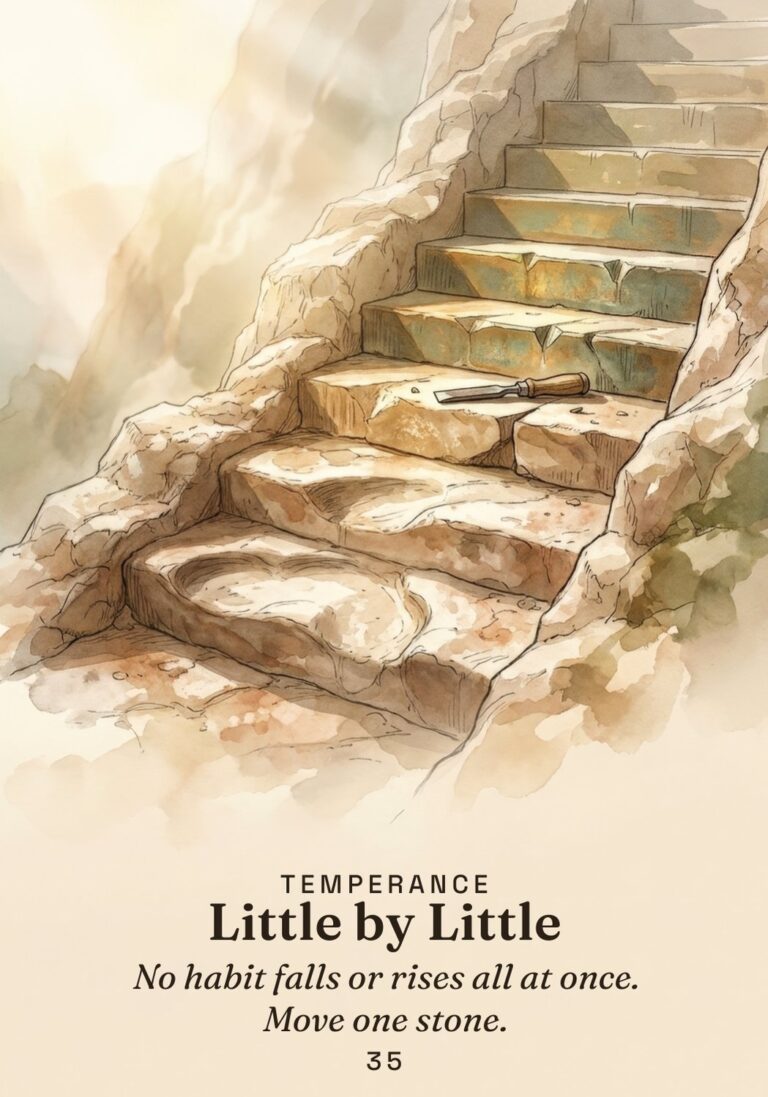
3 · The Next Right Act
No habit falls or rises all at once. Move one stone.
The Next Right Act is one stone. Send the short note, then spend one focused hour on the next application rather than waiting for this one to settle everything. The card warns against waiting for the big change, and the big change here is the offer. One hour of work on my own side is the rep I can actually do tonight.
Read together
Nothing in the reading tells me whether the offer is coming. It tells me where my evening has been going, which is into a column I cannot touch. One plain note, sent. One hour on the next thing. Then I can close the laptop and let the decision travel at whatever speed it travels.
If something has been churning for days, lay the three cards now. The reading tool below lays these same three positions with The Stoic Oracle.