Use this spread when
I lay this one in the run-up to a holiday when a chair is going to be empty, whether it is the first year or the tenth. The deck does not pretend the missing are not missing. Its stories offer different ways to carry absence: tell the bees, light a candle, let the red bird at the window be a comfort. The spread is not a way around the grief. It names the person, finds what is still here, and gives me one thing to do with the season instead of enduring it.
How to lay it
- Hold the question loosely. "How do I carry them through this season?" works better than "How do I get through this?"
- Say the name out loud before you shuffle. Then lay three cards face down, left to right.
- Turn Who Is Missing and write one line about the specific shape of the absence this year. The chair, the dish, the voice.
- Turn What Remains and list what did not leave: the people, the bond, the thing they put in your hands. Let the list be longer than you expected.
- Turn What I Do last and read the three together. Choose the one act, put it in the calendar, and let the tears come when they come.
What each position means
- 1Who Is MissingThe person, named, and the specific shape of their absence this season.
The first card is for saying the name, and I say it before I read the card. Then the card describes the shape of the absence, which is never general. It is the chair, the dish nobody else makes, the argument nobody else starts. Grief at the holidays is specific, and the reading starts by being specific back.
- 2What RemainsWhat is still here of them: the bond, the people who also loved them, the thing they left in your hands.
The middle card is the inventory of what did not leave. A bond that persists whatever form the visit takes, a pack of people who also loved them and are also at the table, a recipe, a phrase, a way of doing the lights. I read this card slowly because grief tends to count the losses and skip the remainder, and the remainder is where the season can still be lived.
- 3What I DoOne concrete act for this season: the telling, the tending, the place set. Small, and done.
The third card is the act, and the deck offers several. Tell the bees. Light a candle. Set a small red thing where you will see it. The card picks one, and I do it, because a grief with nowhere to go at the holidays goes into the dishes and the small quarrels. Given one plain thing to do, it goes there instead.
A worked example with Yule Beasts
Here is how the spread reads with three cards from The Yule Beasts Oracle. Suppose I am wondering how to face the first holiday since my mother died, with her chair at the end of the table and everyone determined not to mention it, and the three cards are The Cardinal, The Gray Wolf, and The Christmas Bees.
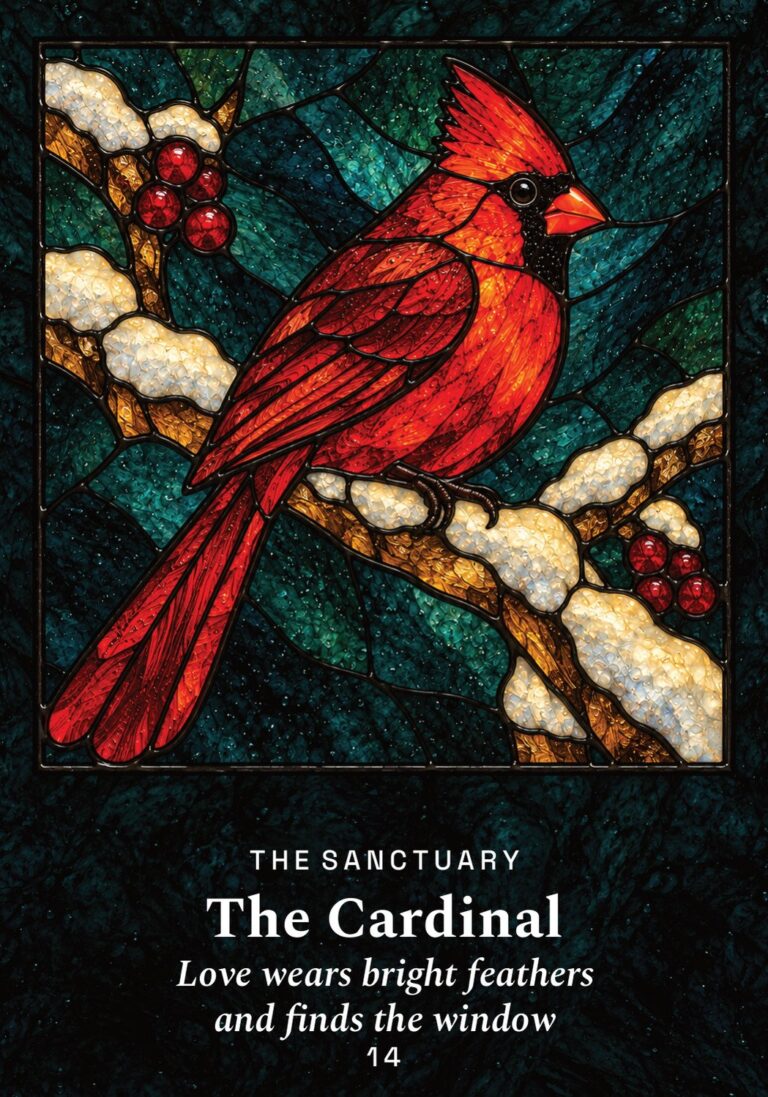
1 · Who Is Missing
Love wears bright feathers and finds the window
Who is missing is my mother, and the card meets me where I am: in loss, refusing the small comforts because they seem too simple. The red bird at the window is a modern belief, and it is beloved because it works. The shape of the absence is the chair and the way she fussed over the gravy, and the card says the bond persists whatever form the visit takes. It also warns, gently, that waiting for signs can postpone the grieving, and that the tears come when they come.
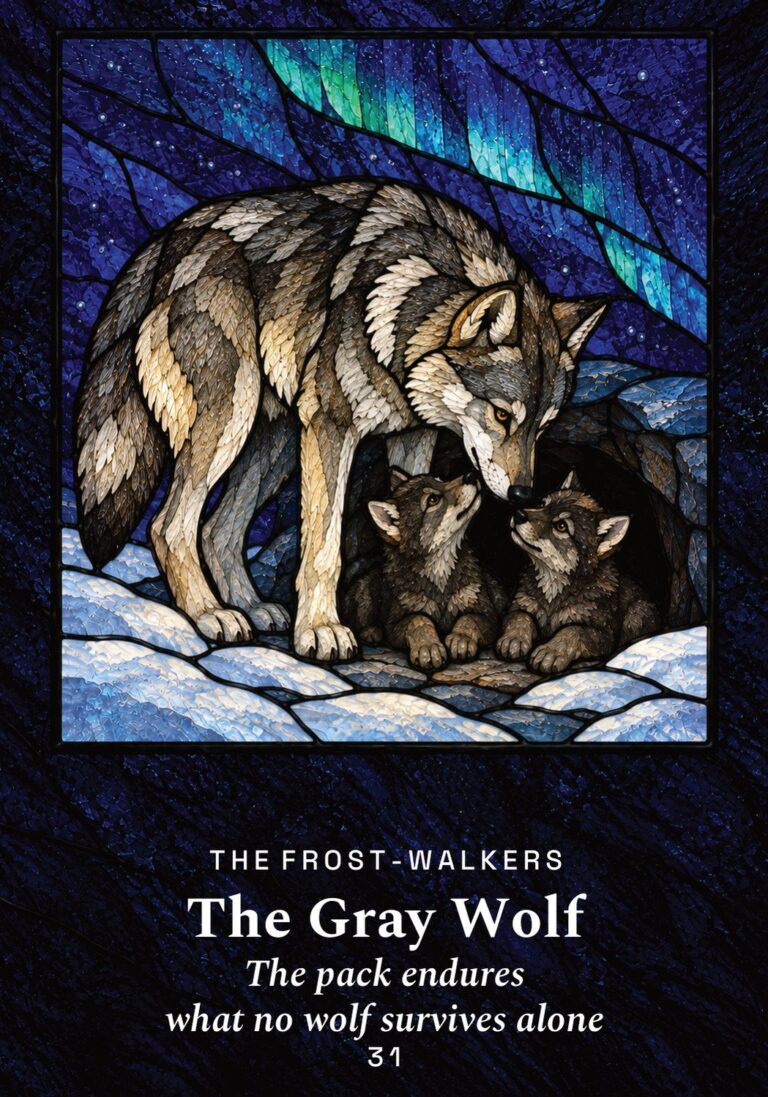
2 · What Remains
The pack endures what no wolf survives alone
What remains is the pack, and the card is blunt about what a pack is for: the ones who can hunt feed the ones who cannot, and this year several of us at the table cannot. My father is starving in private out of pride. My sister has gone quiet. The wolf says close ranks in both directions, check on the struggling animal and admit when it is me. What remains of my mother is the family she fed, and the card asks whether anyone at the table is being fed now.

3 · What I Do
The hive hums in the dark; go and tell the bees
What I do with it is tell the bees. The householder was bound to go out to the hives and say the news of the house aloud, above all a death, or the bees would leave. My family's silence about the chair is the untold hive, and the card says relationships end in everything never mentioned more often than in arguments. The act is one sentence, said at the table before the meal: she is missing, and I miss her. The bees do not need the news to be good. They need it told.
Read together
The missing one is named, and the shape of her absence is the chair and the gravy. What remains is a pack that is not feeding its weakest, because nobody has said the news aloud. What I do with it is say it, one sentence before the meal, and let whatever comes come. The reading does not promise an easy holiday. It gives the grief somewhere to go besides silence.
If someone is missing from the table this year, lay the three cards now. The reading tool below lays these same three positions with The Yule Beasts Oracle.