Use this spread when
I use this for a friendship, a marriage, a working relationship, anything with two people in it. One rule keeps it honest: the first card is not a report on what the other person is thinking. It is my honest read of what they may be carrying. Cards do not do telepathy, and a spread that pretends otherwise becomes a way of arguing with someone who is not in the room.
How to lay it
- Hold the question loosely. "What is going on between us?" works better than "Do they still care?"
- Shuffle, and lay three cards face down, left to right: them, me, and the space between.
- Turn card one and describe the image before you interpret it. Keep it to what they may be carrying, not what they secretly feel about you.
- Turn two, then three. Write one line under each.
- When you go back over the three, read the last one first. The relationship lives there.
What each position means
- 1YouWhat the other person may be carrying right now.
My honest, generous read of their situation, held loosely. This card is a prompt for empathy and a question to ask them, not a verdict on their motives.
- 2MeWhat I am bringing to this, including what I have not said.
My side of it. This is usually the card that stings, because it names what I have been contributing while describing myself as the reasonable one.
- 3The Space BetweenWhat the two of us have actually built.
The relationship as a third thing, with its own condition. Sometimes the trouble lives in the pattern between two people, not in either person alone, and so does whatever is worth keeping.
A worked example with Table of Connection
Here is how the spread reads with three cards from The Table of Connection Oracle. Suppose I am wondering why my partner and I feel miles apart at every holiday gathering lately, even though we sit side by side, and the three cards are The Invisible Wall, Soft Gaze, and Unspoken Anchor.
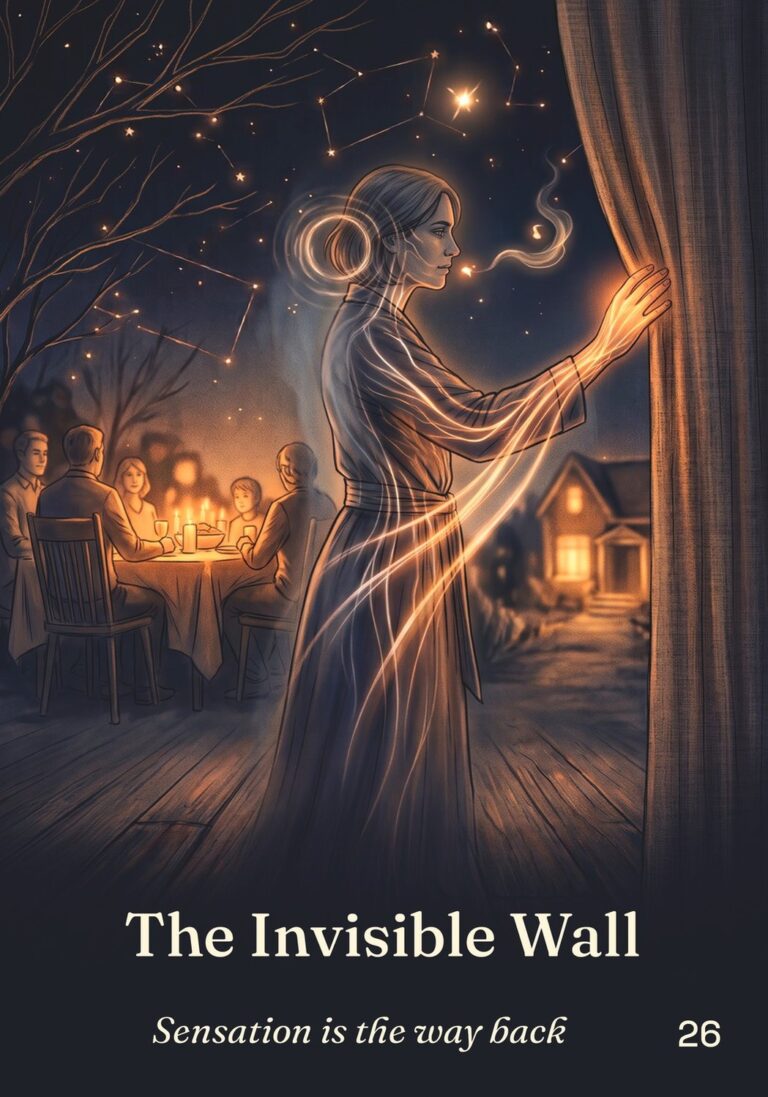
1 · You
Sensation is the way back
For him, the card is the pane of glass. I wonder whether he gets overwhelmed somewhere around the second hour, still nodding, still passing dishes, while I mistake his quiet for distance. I cannot know that from the card. The card treats that kind of fog as protection rather than failure, and it is a prompt to ask him afterward, not a conclusion about him.
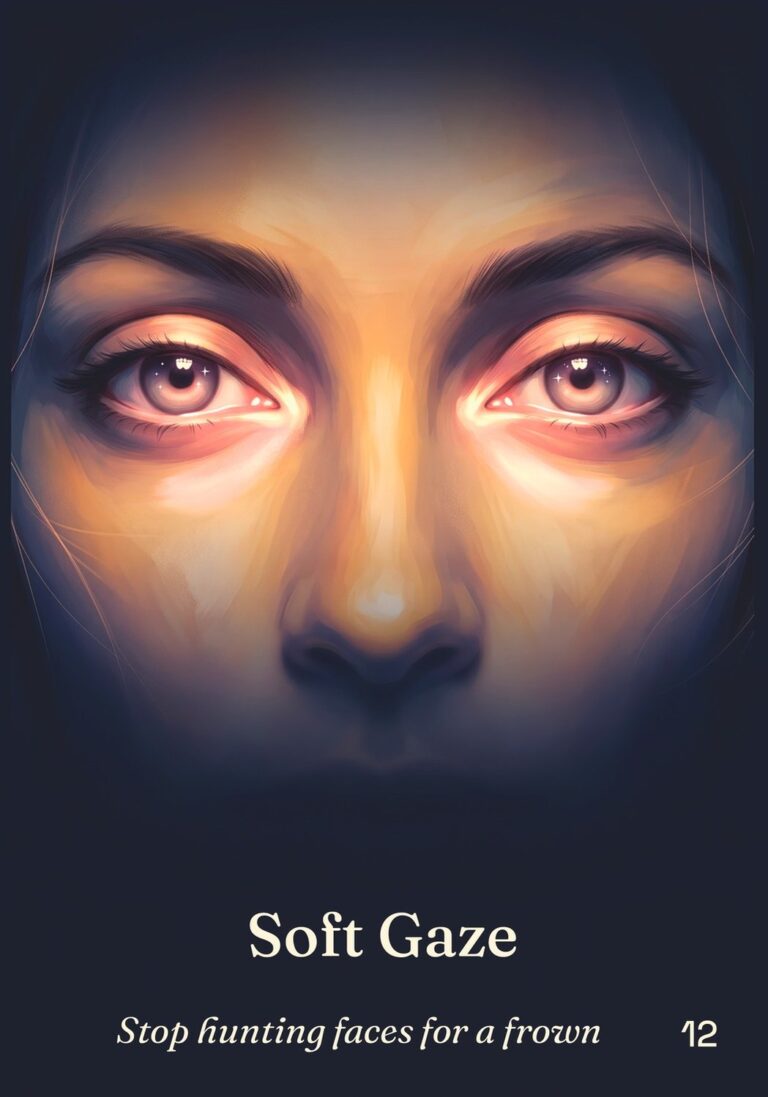
2 · Me
Stop hunting faces for a frown
My card, and it stings a little. While he is going blank, I am scanning everyone's faces for disapproval, including his, and reading his fog as a frown aimed at me. The card names that vigilance as an old habit. Its other edge is swinging to avoiding his eyes entirely, which I have also done, and which leaves us both further apart.
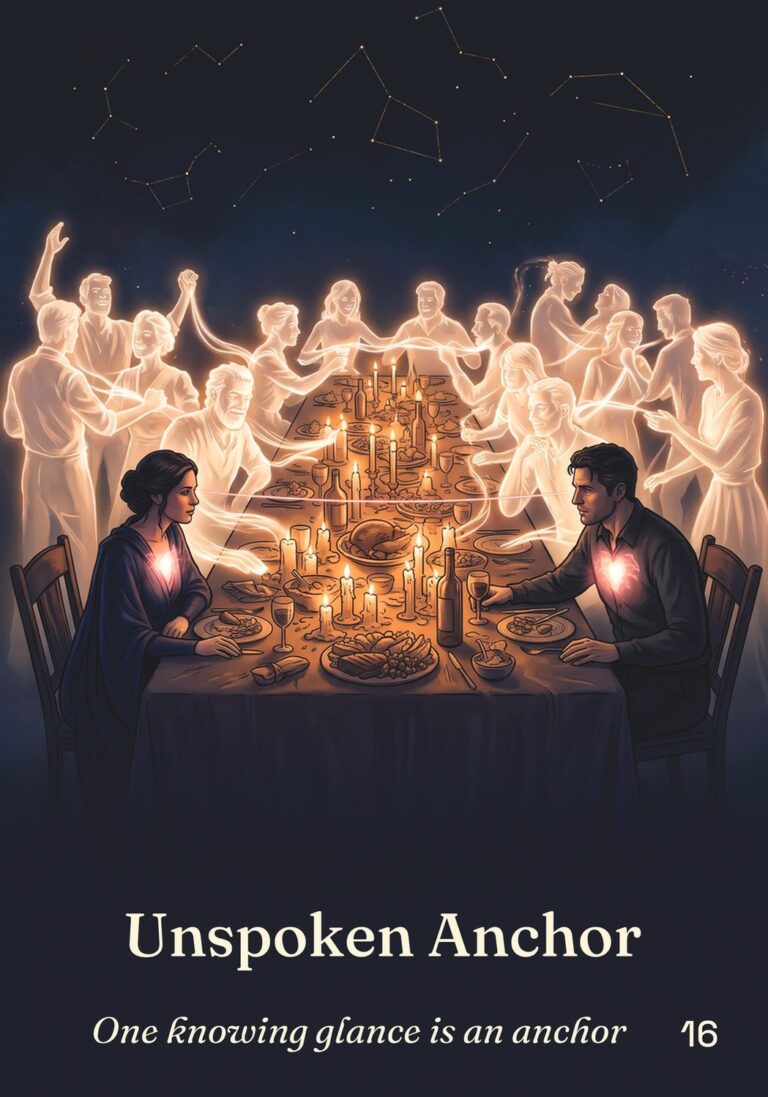
3 · The Space Between
One knowing glance is an anchor
The space between us is the glance we used to trade across loud rooms and have quietly stopped trading. The card says one look can steady two people more than a whole conversation in the kitchen. Its edge is the private eye-roll that turns two people into a team against the room, which is not what we need either.
Read together
This does not necessarily mean there is a crack in the relationship. If the reading is right, one of us goes quiet and the other goes vigilant, and we have each been reading the other's coping as distance. The space between us needs one small thing back: a signal we agree on before we walk in, a look that means "I'm okay" and one that means "I need a minute." The relationship is the part that needs tending, not either of us.
If something between you and someone else needs looking at, lay the three cards now. The reading tool below lays these same three positions with The Table of Connection Oracle.