Use this spread when
Every family hands out roles, often before anyone is old enough to agree to them: the responsible one, the peacemaker, the difficult one, the baby. I use this spread when I notice I have slipped back into mine within an hour of arriving. It is not a spread about blame, and it does not ask me to reject my family. It sorts the inheritance into what I want to keep, because some of it is good, and what I can quietly stop carrying.
How to lay it
- Hold the question loosely. "What role do I fall into at home?" works better than "What is wrong with my family?"
- Shuffle and lay three cards face down, left to right.
- Turn What I Inherited and describe it without blame, as a pattern rather than a person.
- Turn What I Keep and write something good you received. Do not skip it.
- Turn What I Set Down last and choose one small thing you will do differently at the next gathering.
What each position means
- 1What I InheritedThe role, pattern, or script that was handed to you.
The first card names the inheritance. A role I play, an argument that repeats, a way my family handles feelings at the table. I write it the way I would describe weather, noticing the pattern before deciding who is responsible for it.
- 2What I KeepThe part of the inheritance that is worth keeping.
The middle card insists on the good half. Families pass down recipes, humor, loyalty, ways of showing up. If I skip this card, the reading turns into a list of grievances, and that is not the whole truth about where I come from.
- 3What I Set DownThe part you are ready to stop carrying.
The third card names what I can put down, and I aim for something specific I can practice at the next gathering. Not a speech to the family. A small change in what I do when the old role is offered to me.
A worked example with Table of Connection
Laid with three cards from The Table of Connection Oracle, the spread reads like this. Suppose I am wondering why I become the family peacekeeper the minute I walk into my grandmother's house, even though I am forty-one, and the three cards are Intergenerational Echo, Sacred Consumption, and The Child Role.
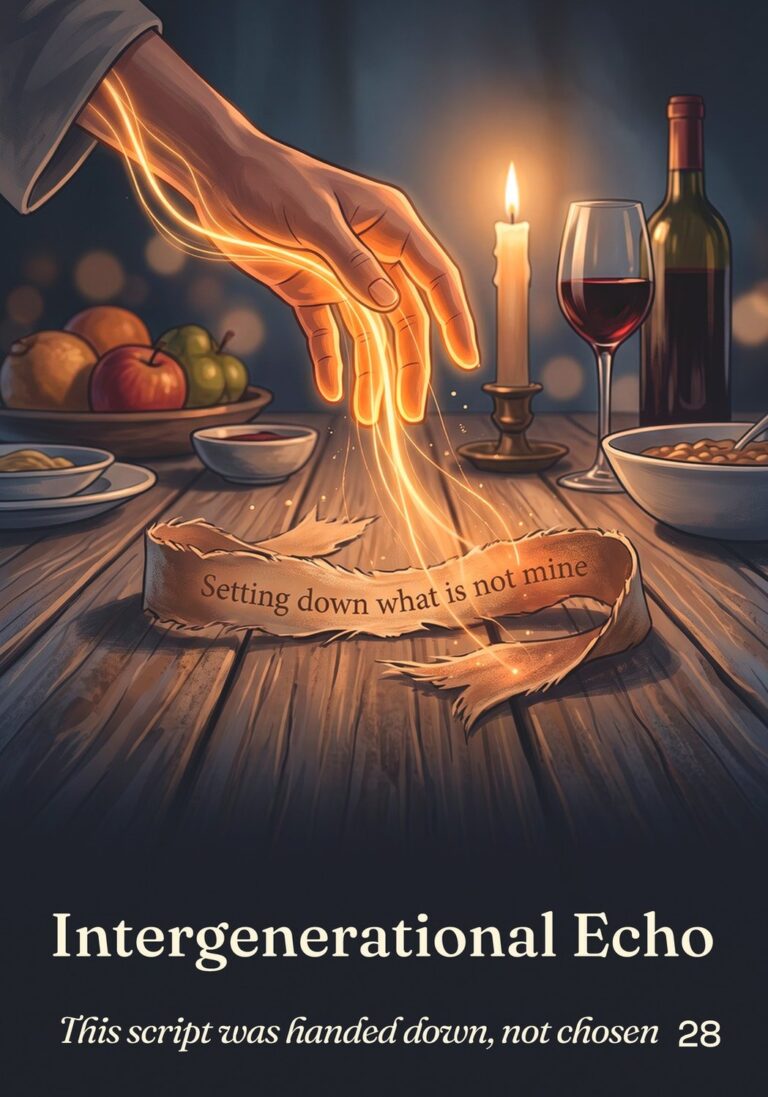
1 · What I Inherited
This script was handed down, not chosen
What I Inherited is the script, and it is older than me. My mother kept the peace between her parents, and I keep the peace between my mother and my uncle. The card names it as handed down, not chosen. Its edge is staying stuck in blaming whoever started it, which would just be another argument at the same table.
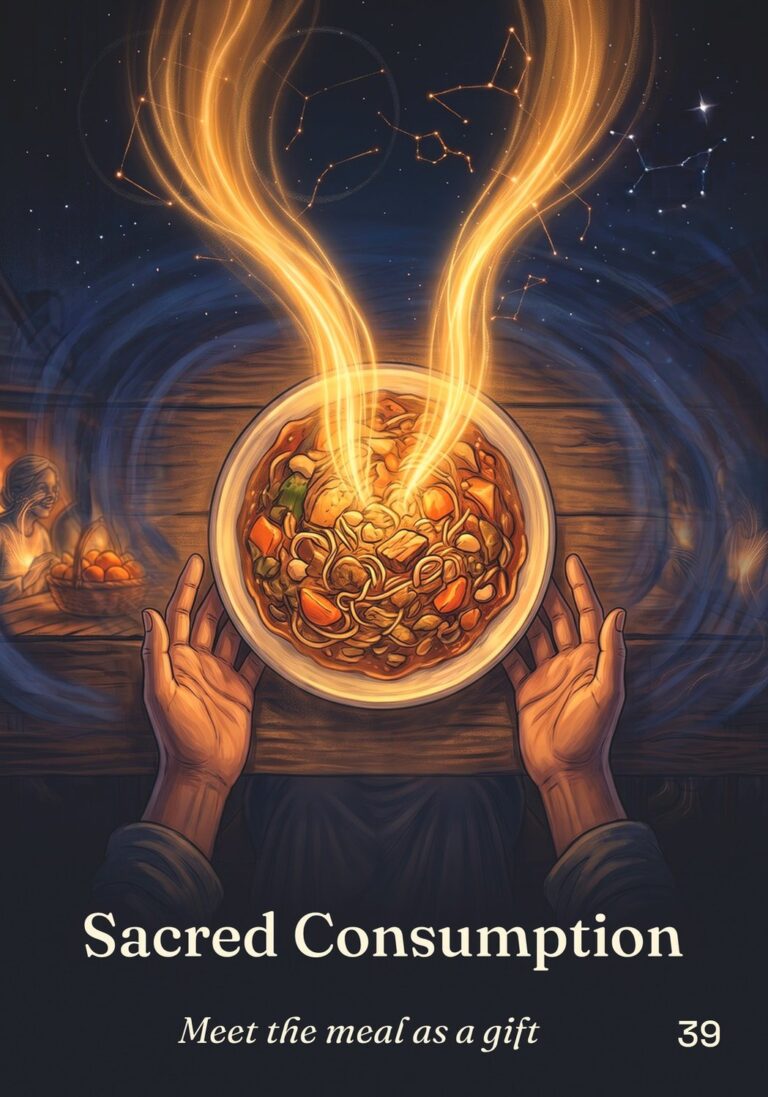
2 · What I Keep
Meet the meal as a gift
What I Keep is the meal itself. My grandmother's table is where the peacekeeping happens, and it is also where I learned that food made by hands is a gift. The card asks me to meet the meal that way instead of bracing against the whole evening. Its edge is turning even gratitude into a rule I perform correctly, and I do not want that either.
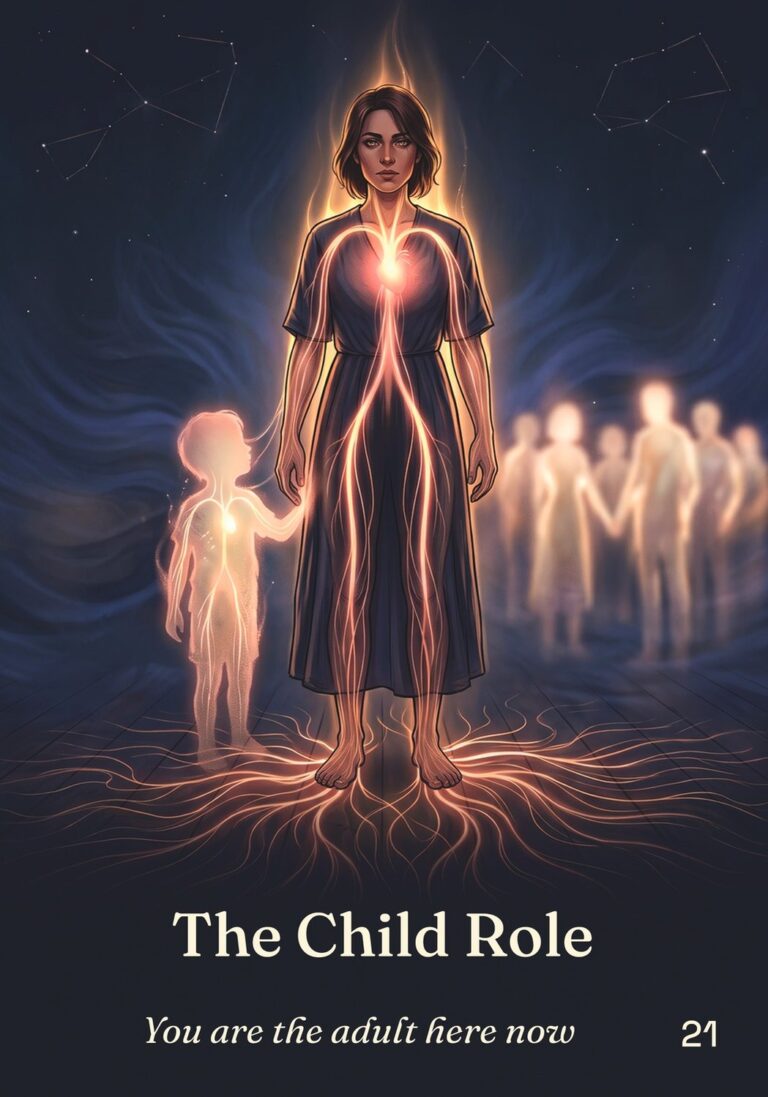
3 · What I Set Down
You are the adult here now
What I Set Down is the twelve-year-old who jumps in the second a voice rises. The card says the role is a groove my body slides into, not who I am now. Its edge is swinging the other way into a loud adult performance, so the change is small: the next time my uncle and my mother start, I stay in my chair and let them have their own argument.
Read together
The peacekeeper role came down through two generations of women in my family, and it is not mine to carry by default. What I keep is the table and the cooking and my grandmother's hands. What I set down is the jump. At the next gathering I will feel the pull, plant my feet, and let two adults sort out their own disagreement. The family will survive one less referee.
If you slide into an old family role every time you go home, lay the three cards now. The reading tool below lays these same three positions with The Table of Connection Oracle.