Use this spread when
I reach for this one when every obvious option feels incomplete: a choice, a transition, a relationship at an impasse. Usually I have been calling the situation complicated when the more honest word is costly. It does not hand me the right road. It shows me what the choice is actually made of.
How to lay it
- Hold the question loosely. "What is this choice actually about?" works better than "Which one should I pick?"
- Shuffle and lay three cards face down, left to right.
- Turn The Threshold and describe the image in a sentence before you read anything. Then read the guidebook entry.
- Turn The Unexpected Route. Write down the option it points at even if you have already dismissed it.
- Turn The Hidden Cost last, and read all three as one paragraph. The reading is usually in what the third card charges for the second.
What each position means
- 1The ThresholdThe choice, boundary, or transition that is actually present, beneath the one you think you are facing.
The real fork is often one layer below the choice I have been describing to friends. When this card names something I was not expecting, that is usually the whole reading. The question I brought is rarely the question I am standing in.
- 2The Unexpected RouteThe unconventional option, reframing, or detour you have overlooked or dismissed.
The road I have already ruled out, or never counted as a road. Sometimes it is a third option. Sometimes it is the same option approached from a different side. I let this card be strange before I decide whether it is useful.
- 3The Hidden CostThe consequence, appetite, or destabilizing factor that must be accounted for before you move.
What the move will charge me, named before I make it rather than after. This card is not a warning to stop. It is the toll booth. Every road has one, including the road of standing still.
A worked example with Trickster
Here is how the spread reads with three cards from the Trickster Oracle. Suppose I am deciding whether to take on a large commission that would fill the next four months, and the three cards are The Crossroads, The Unmarked Path, and The Bargain.
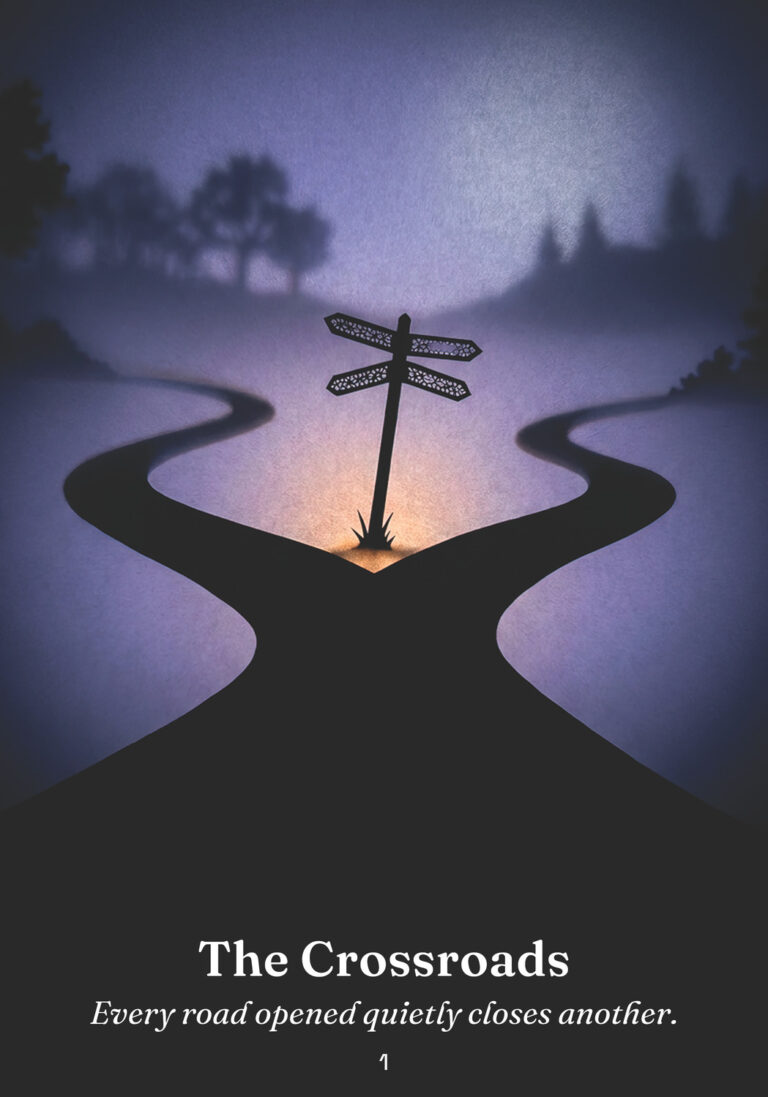
1 · The Threshold
Every road opened quietly closes another.
The threshold is not the commission. It is the fact that saying yes quietly closes the unbooked months I had been protecting without admitting I was protecting them. The card is blunt about the state I am in. I am not confused, I dislike the cost, and those are different problems. Its shadow is the one I recognize: a pros-and-cons list that runs for weeks and lets me avoid saying no to either road.
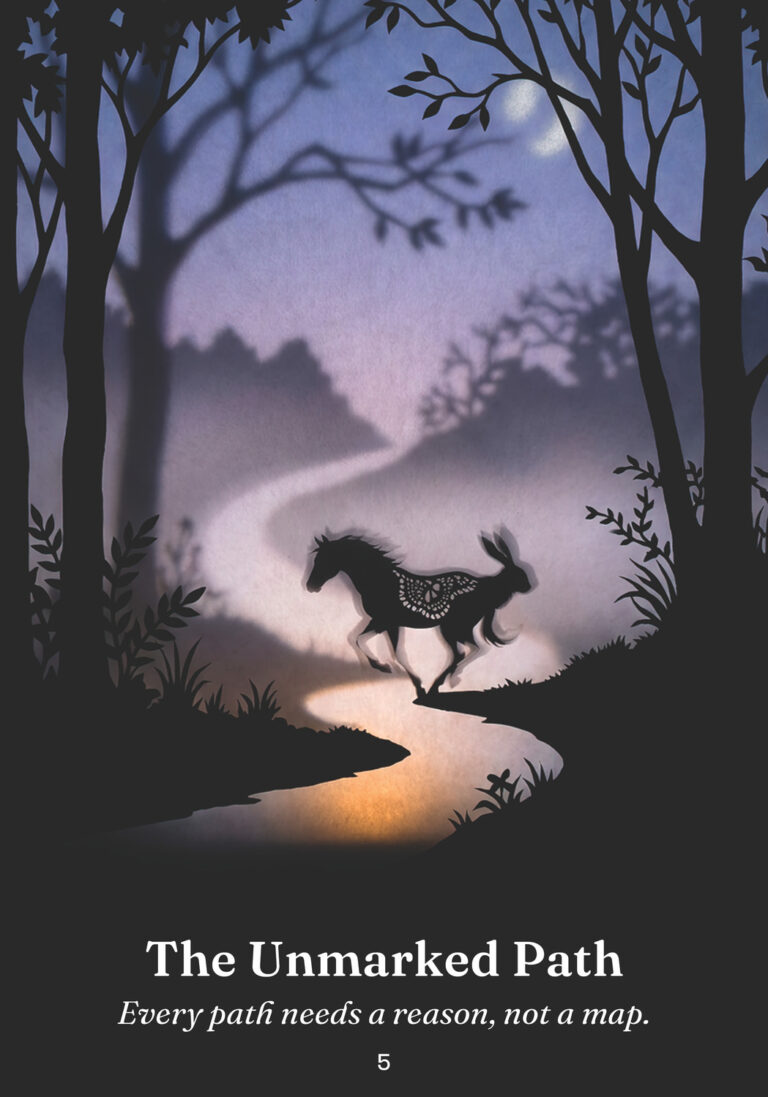
2 · The Unexpected Route
Every path needs a reason, not a map.
The route I had not counted is the one with no signpost: take part of the work, or take it on a timeline nobody has offered yet. The card does not tell me that is the right road. It gives me a test instead. Follow it while I can name a reason, and turn back the moment the only reason left is that it is interesting.
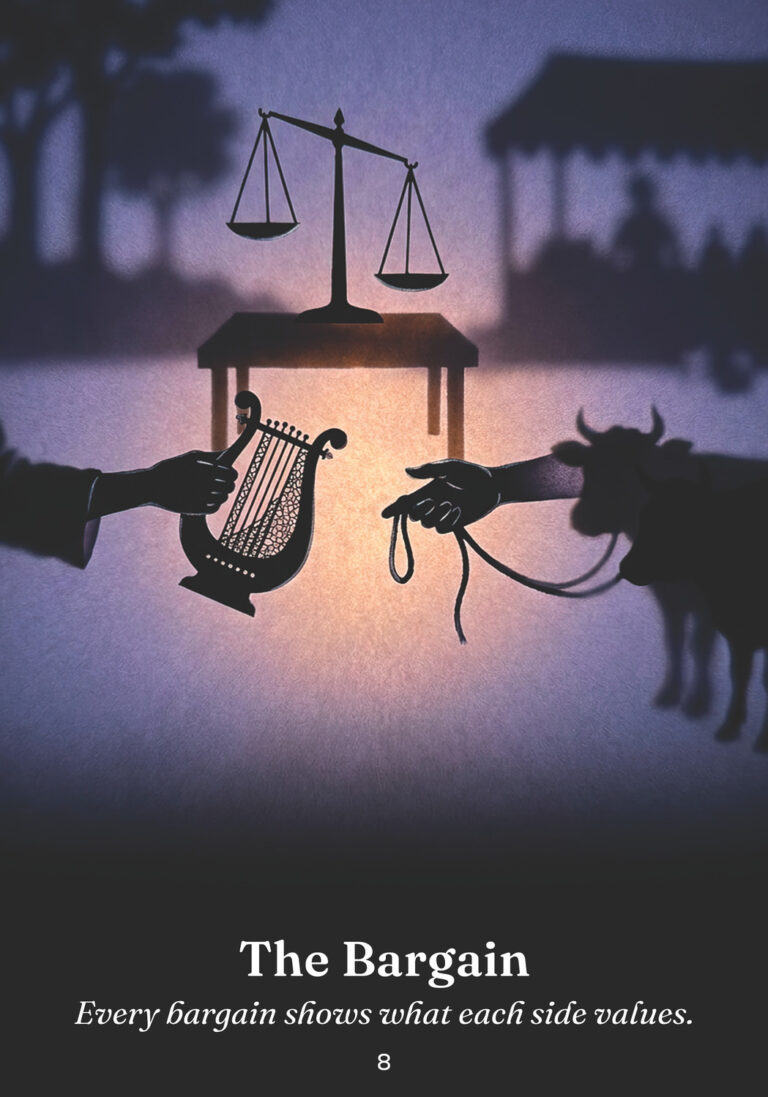
3 · The Hidden Cost
Every bargain shows what each side values.
The hidden cost sits in the terms. Every deal shows what each side thinks is valuable, and four booked months tells me plainly what I am treating as cheap. The card sends me looking for the clause nobody mentioned, and warns me off trading the one thing I cannot buy back, which here is the open time the next idea would need.
Read together
The choice is not the commission. It is whether the open months were ever a real commitment or just a thing I liked having. The unmarked route is a partial yes I have not proposed, and the cost of any yes is hidden in the clause I have not read. That is one honest conversation with the client, not a decision I have to make alone tonight.
If every option in front of you feels incomplete, lay the three cards now. The reading tool below lays these same three positions with The Trickster Oracle.