Use this spread when
I lay this one in the day or two after something I set in motion has come back around. Not for the disaster itself, which needs a phone call rather than a spread, but for the part just after, when the temptation is to explain it away or double down. The third position is where this spread earns its keep.
How to lay it
- Hold the question loosely. "What route did this take home?" works better than "Whose fault was this?"
- Write the sequence of what happened, in order, before you shuffle.
- Lay three cards face down, left to right.
- Turn one and two. Resist explaining the first card while you read it.
- Turn three. Read all three together, and write down one thing you understand now that you were not seeing last week.
What each position means
- 1What I Set in MotionThe move you made, stated without defense.
The original action, including the part of it I would rather describe as circumstance. I write this card's line as though someone else did it, because the defensiveness comes off more easily in the third person.
- 2How It Came BackThe shape the return took.
What actually happened, in sequence. The return is rarely the reverse of the move. It usually arrives somewhere adjacent, through a person or a channel I was not watching, and that offset is information.
- 3What the Route Tells MeWhat you now understand that you did not before.
The reading. A plan that fails loudly is a plan I finally understand, and this card names the specific thing I understand now that I was not seeing before it came back. Not the lesson in general. The piece I was blind to.
A worked example with Trickster
Here is how the spread reads with three cards from the Trickster Oracle. Suppose a favor I arranged quietly for someone has turned into a complaint about how I handled it, and the three cards are Reynard's Ruse, The Backfire, and Iktomi's Web.
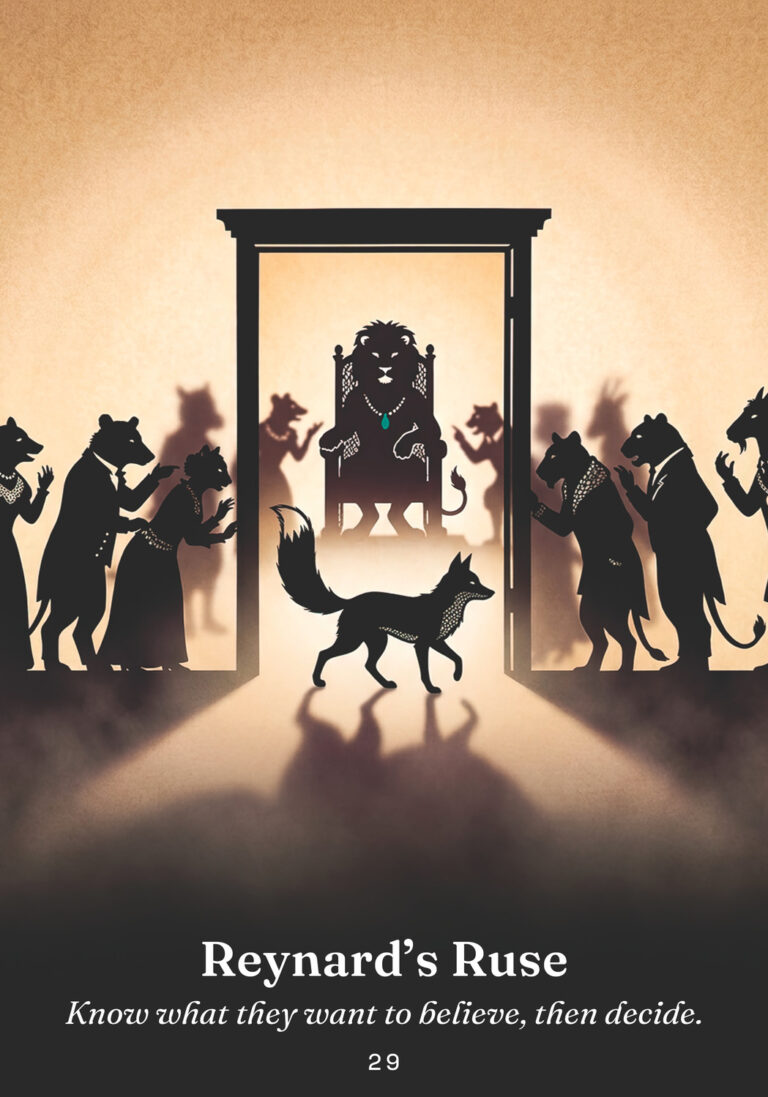
1 · What I Set in Motion
Know what they want to believe, then decide.
Reynard talks his way out of the lion's court by telling it what its vanity wants to hear. What I set in motion was a version of that, framed to land well rather than said plainly. The card is careful here: reading the room is a real skill and I have it, and the question was never whether it would work. Its shadow is reputational debt, short wins that breed long enemies.
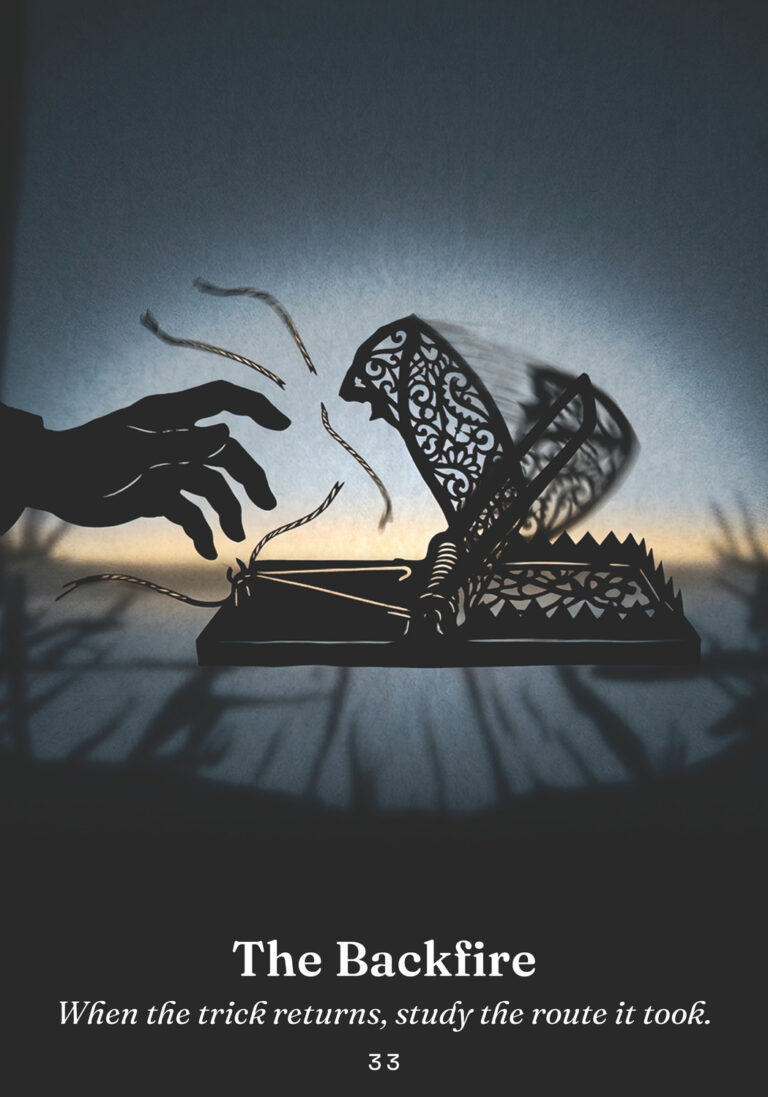
2 · How It Came Back
When the trick returns, study the route it took.
The trickster's most reliable ending is the trick coming home, and it has. The card is explicit that this is not the moment to double down, which is the move I can feel myself reaching for. Its shadow is blame plus escalation because it was supposed to work, and the instruction instead is to study the route.

3 · What the Route Tells Me
Ask who tied the first thread before you cut.
Iktomi schemes and ends up caught in a trap of his own design. What the route tells me is which threads in this web are mine, and the honest answer is more of them than the complaint suggests. The card does not say the trap was entirely my doing. It says look before I blame it, and knowing which threads are mine is where getting out starts.
Read together
The favor was framed to land well rather than said plainly, and the complaint came back through the part I had left unspoken. That route is the useful part. It shows me exactly where the framing stopped holding. The repair is the plain version of the favor, said directly to the person who complained, with my own thread named and no argument about the rest.
If something you set in motion has come back around, lay the three cards now. The reading tool below lays these same three positions with The Trickster Oracle.