Use this spread when
I lay this one when I have broken the same promise to myself enough times that willpower is clearly not the missing ingredient. It starts from an uncomfortable assumption: a pattern that survives this much effort is getting paid. The middle card is the one that does the work here.
How to lay it
- Hold the question loosely. "What is this pattern doing for me?" works better than "Why do I keep ruining things?"
- Name the last two times it happened, with dates, before you shuffle.
- Lay three cards face down, left to right.
- Turn one and two together and sit with the second card longer than is comfortable. The payoff is the reading.
- Turn three. Read all three as one paragraph, then pick the smallest exit you could test before the month is out.
What each position means
- 1The LoopThe move you keep making, named without the excuse attached.
The pattern itself, described as behavior rather than character. Not who I am, what I do. Keeping this card descriptive is most of the discipline of the spread, because the temptation is to skip straight to judgment.
- 2The PayoffWhat the loop is giving you.
The benefit, and there is always one. Safety, an excuse, a familiar feeling, a way of not finding out. This card is the reason the pattern beats every plan I have made against it. Naming the payoff is uncomfortable and it is the point.
- 3The ExitWhat would have to be true for you to stop needing it.
Not a resolution. The condition that makes the payoff unnecessary, or the smaller way to get the same thing. If this card points at something large, I look for the version that fits inside one week.
A worked example with Trickster
Here is how the spread reads with three cards from the Trickster Oracle. Suppose I am asking why I keep abandoning projects at roughly the eighty percent mark, and the three cards are The Entangled Net, Appetite, and The Unraveling Thread.
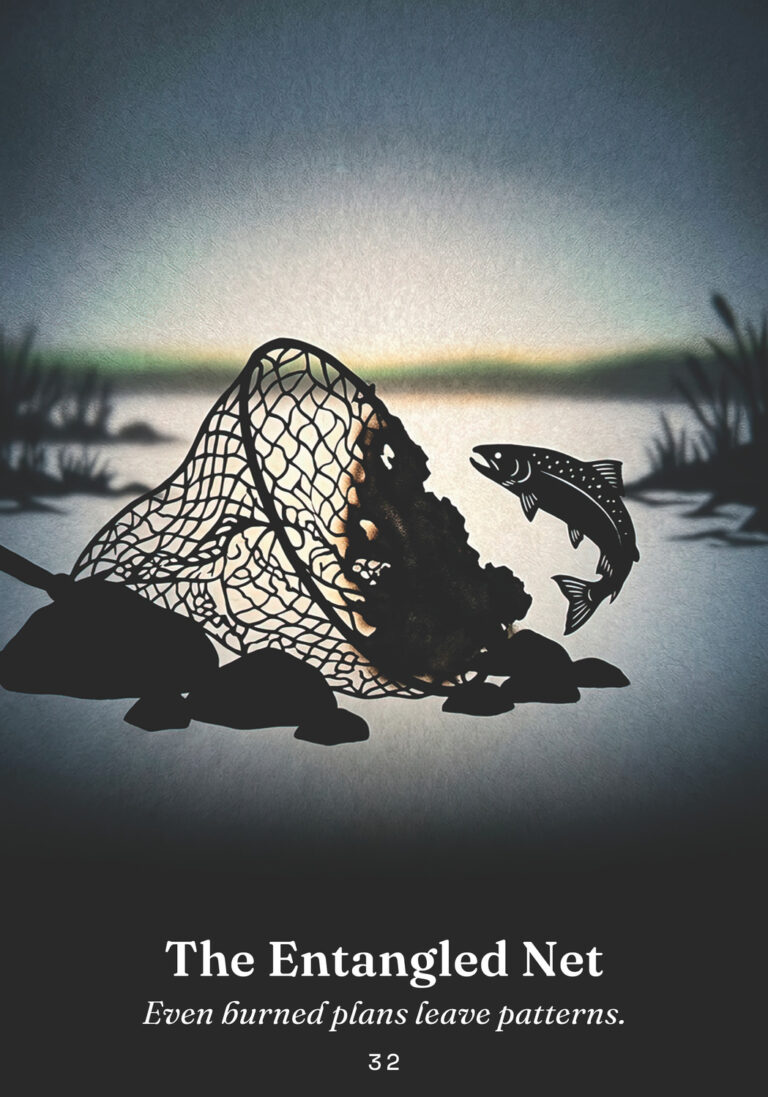
1 · The Loop
Even burned plans leave patterns.
Loki burns the net and leaps into the river, and the ash still holds the pattern the gods use to catch him. The loop is not simply abandoning the work. It is leaving the same shape behind every time and refusing to study it. Its shadow lands squarely: denying accountability while standing in my own footprints.

2 · The Payoff
Desire is information, not command.
The payoff is that an unfinished thing stays perfect. The card is generous about this. Appetite is not the villain. It is information about what I need, and what I apparently need is to keep the work in the state where it cannot be judged as finished. It turns dangerous only when it is promoted from messenger to strategist, which at eighty percent is exactly what has happened.
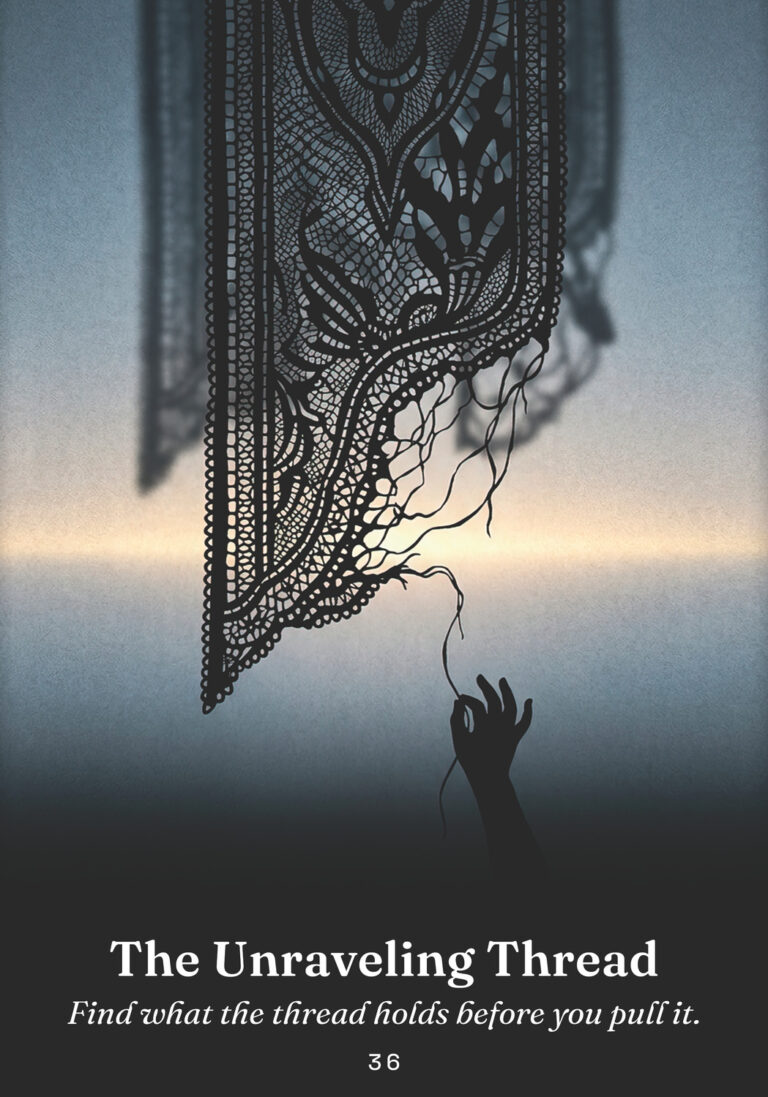
3 · The Exit
Find what the thread holds before you pull it.
The exit is not more discipline. Something here is coming apart and I am tempted to help it along, and the card asks what else is tied to that thread before I pull. Deconstruction is a skill and collapse is just a mess. Finishing one thing badly and on purpose is the small version of the test.
Read together
The pattern is not weak follow-through. Stopping at eighty percent keeps the work from facing a final judgment, and that is a real payoff I have never named. The exit is not a better system. It is finishing one thing below my standard, on purpose, and finding out whether the disappointment is survivable. That is a week's experiment, not a personality change.
If you keep making the same move against your own plan, lay the three cards now. The reading tool below lays these same three positions with The Trickster Oracle.