Use this spread when
I lay this one with the phone face down on the other side of the room. The urge to reach out has a particular hour, usually late, and a particular shape, usually a message that would undo three months of distance in one line. The guidebook's full version is six cards and takes the question apart properly. This three-card cut keeps the spine: what is pulling me, what the ending was actually about, and the one move that is wise whether or not they ever reply. It is built for the night the draft exists. It is not built to tell me whether they miss me, because no card can. And if the ending involved threats, control, or a no-contact boundary the other person asked for, this spread is not a reason to override that; card 39 comes first.
How to lay it
- Hold the question loosely. "What is this urge made of, and what would I need to see?" works better than "Should I text them?"
- Put the phone in another room. Shuffle and lay three cards face down in a row: What Draws Me Back, What Actually Broke, My Wisest Next Step.
- Turn the first card and write what the pull is made of in one plain sentence that does not mention their name.
- Turn the second card and write what the ending was about underneath the last fight, in words a friend who was there would agree with.
- Turn the third card and choose a step that would still be wise if they never replied. Do that step before you pick the phone back up.
What each position means
- 1What Draws Me BackThe need, love, fear, or familiarity beneath the wish to reunite.
The pull, named honestly. Sometimes it is love. Often it is a quiet apartment, a Sunday with nothing in it, the fact that they knew how I take my coffee. Grief does this: it wants to go backward and retrieve. I do not shame the pull. I ask what it is made of, because a wish built from loneliness and a wish built from a real bond call for different next steps.
- 2What Actually BrokeThe pattern or incompatibility that mattered most.
Not the last fight. The thing under the last fight, the pattern or the mismatch that was there for months before the door closed. The pull in the first position tends to edit this card out, so I read it slowly and in plain words. If I cannot name what broke, I am not ready to reopen anything, because I would be walking back into a room I never finished looking at.
- 3My Wisest Next StepWhat you can choose now, before you know the final outcome.
The move that is mine whatever they do. Sometimes it is writing the three things I would need to observe before a reunion made sense. Sometimes it is deleting the draft and calling a friend. Sometimes, with criteria in hand, it is sending a plain message with no hook in it. The card does not say which. It says the step has to be wise before I know the ending, not after.
A worked example with The Second Question
Here is the spread with three cards from The Second Question. It has been four months. I saw a photo of him at a party on Saturday and I have had a message drafted since Sunday night, three words long, and I have rewritten it nine times. Suppose I am wondering what this urge is made of and what I would need to see, and the three cards are Grief Has Seasons, Chase and Retreat, and Back Is Not Better.
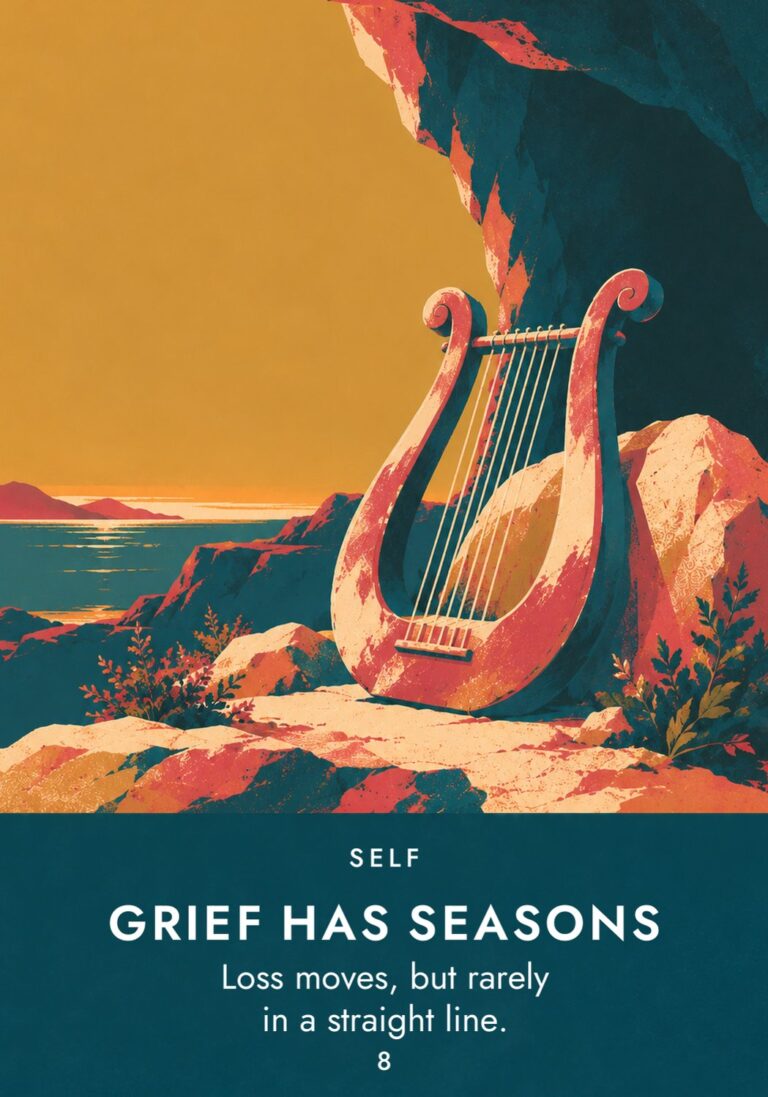
1 · What Draws Me Back
Loss moves, but rarely in a straight line.
What Draws Me Back is grief doing what grief does. The card carries the oldest version of this wish, the walk into the underworld to retrieve someone, and the look backward that costs everything. Four months is not a failure of progress; a photo at a party is exactly the kind of thing that sends loss sideways. The draft is not a decision about him. It is the backward look. The card's edge is making grief a permanent address, and I can feel the room being furnished: the same song, the same photo, the same draft.
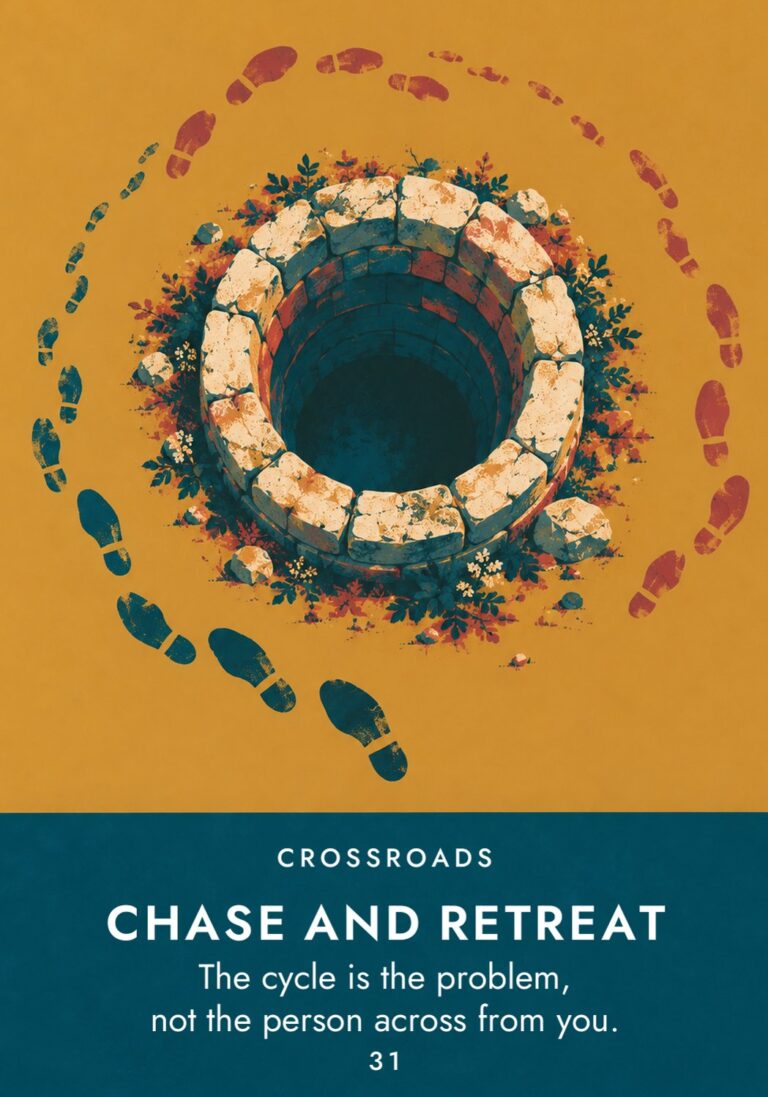
2 · What Actually Broke
The cycle is the problem, not the person across from you.
What Actually Broke was a loop, not the fight in March. I pressed for answers, he went quiet, the quiet frightened me into pressing harder, he left the room. That loop ran most weeks for the last year, and the card is honest that a loop can be real while the weight inside it is uneven. My part was the pressing. His was the leaving without a return time. Nothing in that loop has been looked at by either of us since, and a three-word message would land in the same loop at the same step.
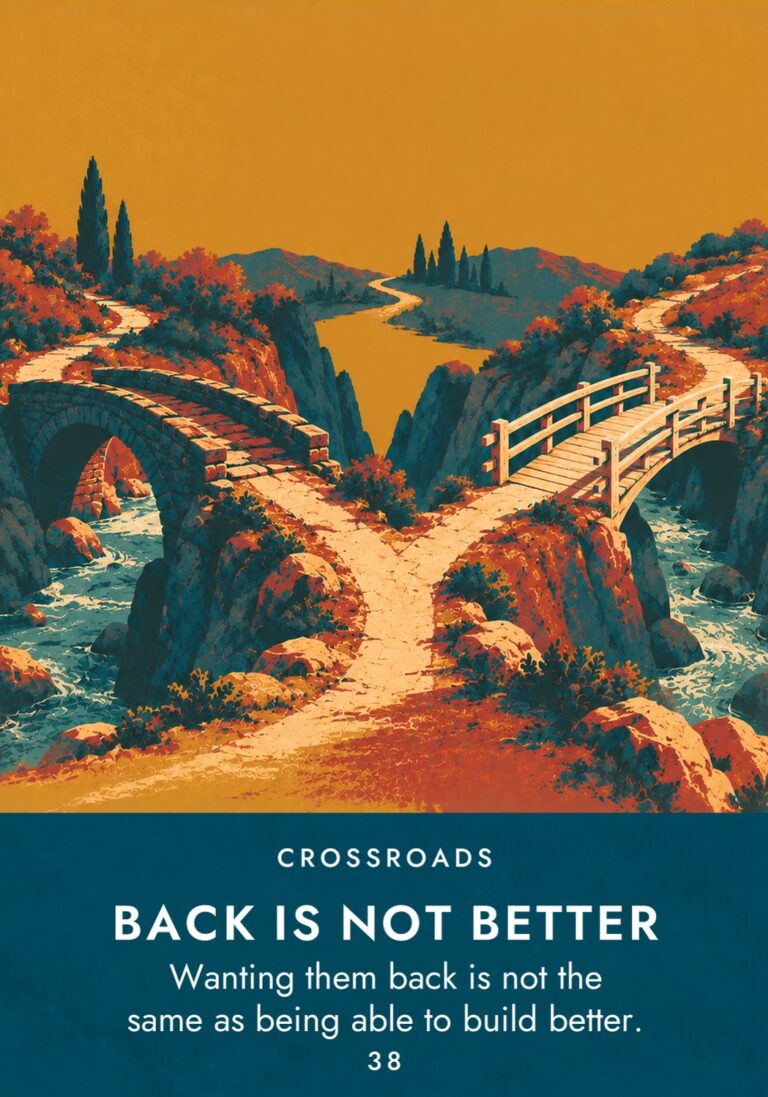
3 · My Wisest Next Step
Wanting them back is not the same as being able to build better.
My Wisest Next Step is criteria before contact. The card declines the question I brought, whether he is coming back, and asks a different one: if contact resumed tomorrow, what would keep the loop from running again? I can write three things a stranger could check. He names his part of the cycle without being asked. He names a return time before he leaves a conversation. Three months of a kept agreement, any agreement. None of those can be seen from a three-word text, and the card is careful about the difference: a conversation might show me whether those changes are possible, but it would not be evidence that they had happened. Reopening contact and rebuilding the relationship are two decisions. The edge is refusing to look at evidence if it ever appears, and the list protects me from that too. It is not a no. It is what yes would look like.
Read together
The pull is grief, and grief is allowed. What broke was a loop neither of us has examined. The wise step tonight is to put the draft aside and write what would have to be different before reconciliation made sense. I do not have to decide tonight whether to reopen contact, and I do not have to mistake reopening contact for rebuilding the relationship. Nothing here says whether he thinks of me. It says a three-word message would land in the old loop, and that I can hope with my eyes open instead.
If the message is drafted and your thumb is over it, lay the three cards now. The reading tool below lays these same three positions with The Second Question.