Use this spread when
I made this one for the weeks or months after the first shock, when daily life has resumed but the loss is still finding new places to hurt. This is for the stretch after, when a song in a grocery store can undo a Tuesday and the empty side of the calendar on a Sunday has started to feel like a verdict. The deck's position on grief is simple: let it be real, and do not let the backward look drive. So the first card separates the losses instead of lumping them under one name. The second finds the routine that has outlived the relationship. The third asks what is mine to decide now, which is a smaller question than whether I am over it and a more useful one.
How to lay it
- Hold the question loosely. "What am I actually grieving, and what is mine to choose this week?" works better than "When will I be over this?"
- Shuffle and lay three cards face down in a row: What I Am Grieving, What Still Belongs to the Old Life, What Is Mine to Choose Now.
- Turn the first card and name one thing you are grieving besides the person: a shared plan, a routine, a role, a sense of belonging. Write it on its own line.
- Turn the second card and name one habit still running on the old life's clock. Decide, in writing, whether to keep it on purpose or change it on purpose.
- Turn the third card and put one plan in the calendar that would still matter if nothing about your status ever changed. Do it before you pick up the phone.
What each position means
- 1What I Am GrievingThe loss underneath the loss, named separately from the person.
Not the person, or not just the person. The plans for the summer. The version of me who was half of a couple at parties. The family on the other side who were kind. The daily text at lunch. Each one is its own loss with its own pace, and lumped together they feel bottomless. Separated, some turn out to be nearly finished and some have barely started. This card picks one to look at properly.
- 2What Still Belongs to the Old LifeThe habit, ritual, or thread that is still running on the old life's clock.
The thing I am still doing that made sense when the relationship existed and does not now. The coffee order for two. The saved thread I reread. The check of a profile at eleven at night. The card does not say to cut it. It says to notice that it is running on a clock that has stopped, and to decide on purpose whether to keep it, change it, or let it go, instead of drifting through it.
- 3What Is Mine to Choose NowThe decision that belongs to you today, whatever the other person ever does.
The piece of the week that is mine. A plan that would matter if my relationship status never changed. A purpose for the distance that does not mention their response. One ordinary task done with both hands while the backward look waits for its appointment. The card does not promise the grief will finish on a schedule. It points at the one thing in the day that was never theirs to hold.
A worked example with The Second Question
Here is the spread with three cards from The Second Question. Five months on, I am fine most days and undone on Sundays, which were the day for the market and her parents' kitchen, and I still reach for my phone at eleven to see whether she has posted. Suppose I am wondering what I am actually grieving and what is mine to choose this week, and the three cards are Shared Meaning, No Contact, and Alone, Not Exiled.
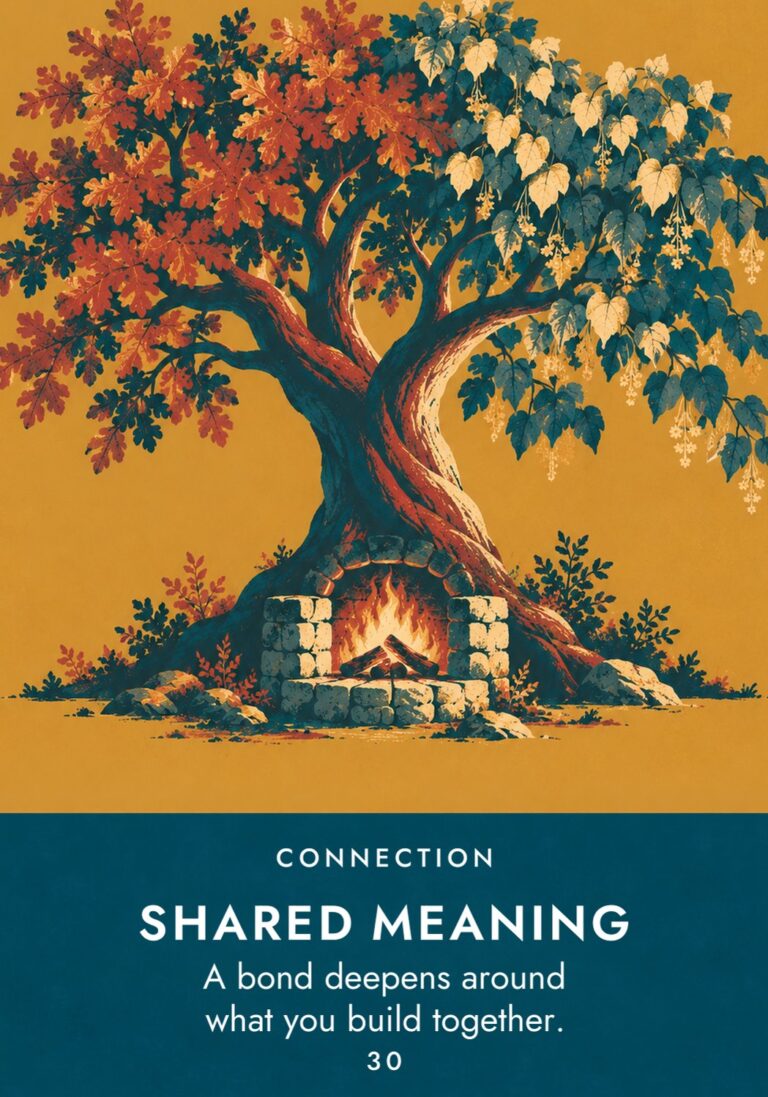
1 · What I Am Grieving
A bond deepens around what you build together.
What I Am Grieving is not her, or not mostly. It is the thing the card describes building: the Sunday market, the chosen family in that kitchen, the why that was larger than either of us. The relationship had a direction, and I am grieving the direction more than the person. That is a separate loss with its own pace, and naming it as separate makes the Sundays make sense. The card's edge is the grand story, meant to be, used to cover an absence of mutual behavior, and I can hear myself telling that story at dinners. The market was real. The story around it has been growing since the ending.
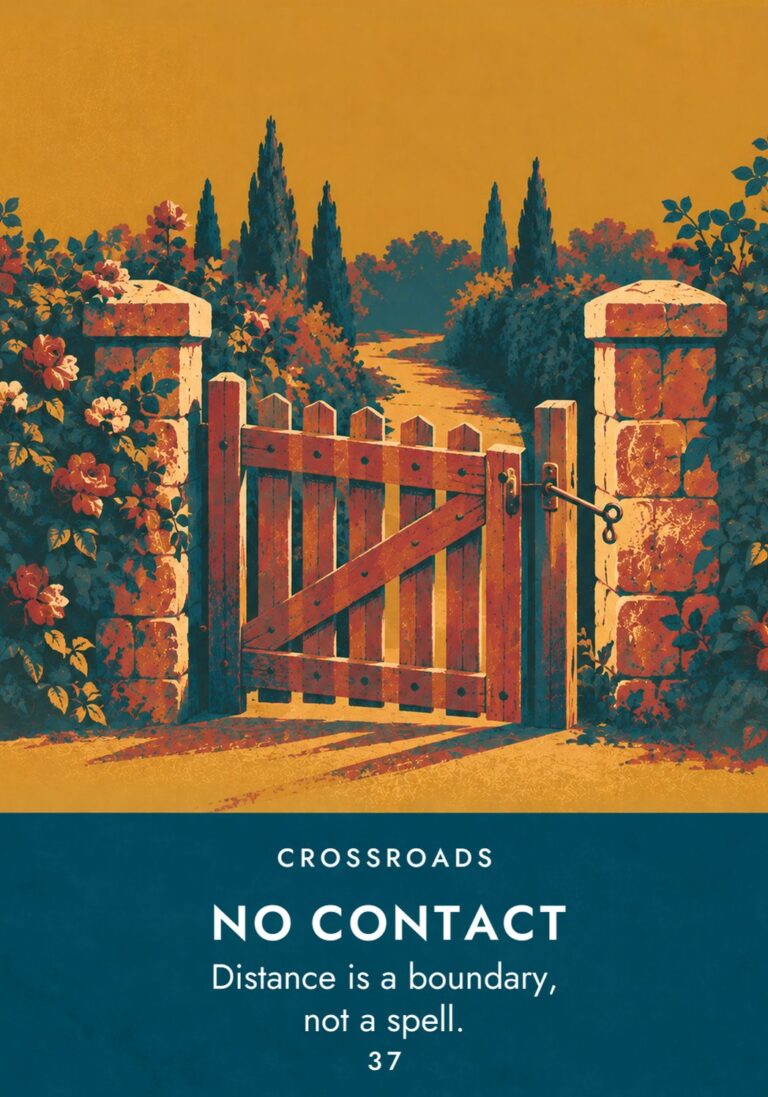
2 · What Still Belongs to the Old Life
Distance is a boundary, not a spell.
What Still Belongs to the Old Life is the eleven o'clock check. The card asks what the distance is for, in a sentence that does not mention her response, and the honest sentence is: so I stop restarting the bargaining every night. That is a boundary. The checking is the thread that keeps me inside a relationship I am supposedly out of, from a distance. The card's edge is the boundary broken every weekend because relief beats the reason I set it, and the reason has been abstract while the relief has been one tap away. Removing the easy route is the plain move: the account I check, the saved thread.
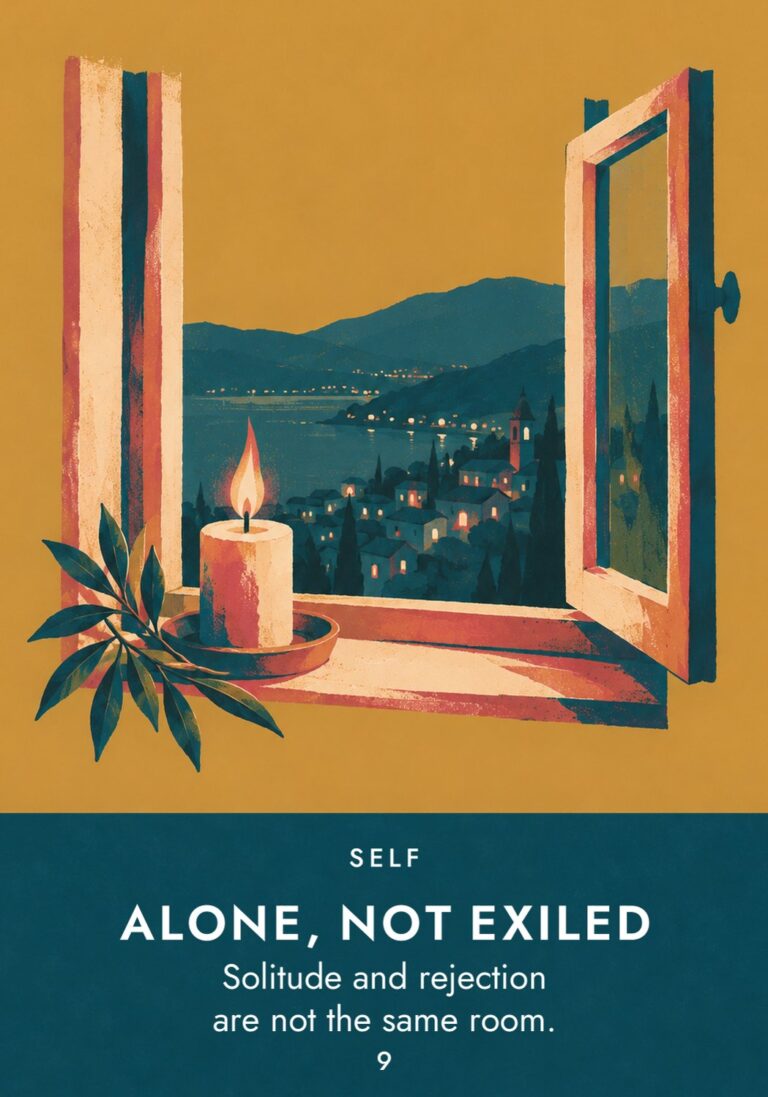
3 · What Is Mine to Choose Now
Solitude and rejection are not the same room.
What Is Mine to Choose Now is the Sunday itself. The card separates the fact of a quiet day from the old meaning that attached itself to quiet days a long time ago, in a different room. The quiet is information: what I eat when nobody is deciding with me, what I do with a free morning when it is not a compromise. The edge is the panic that accepts anyone to fill the day, or the armor that decides nobody could matter enough to risk it. Neither is required. One plan on the calendar that would matter if my status never changed, this Sunday, is the whole choice.
Read together
I am grieving a direction, not just a person. The eleven o'clock check still belongs to the old life, and its purpose, once written, is a boundary I can keep by removing the easy route. Sunday is mine to fill on purpose. Nothing here says when the grief will finish. It says the losses are separate, the thread has a name, and one morning this week is already mine.
If it has been months and it still hurts in strange places, lay the three cards now. The reading tool below lays these same three positions with The Second Question.