Use this spread when
I lay this one after the fight, not during it, once the door has closed and the air is heavy and I have started building the case. The subject changes, the holidays, the dishes, the text from the airport, and the shape does not. One of us presses, one of us goes quiet, the quiet frightens the presser, the presser presses harder, somebody leaves the room. The spread is not interested in who started it. It draws the loop so I can see it, and then it asks for the one arrow that is mine. Changing one arrow does not fix the fight by itself. It is the one move I have that does not require the other person to go first. One line before the layout: this spread is for recurring disagreements where both people can take part safely. It is not a way to make myself responsible for someone else's threats, intimidation, or cruelty. Changing my part of an ordinary argument is a different thing from managing someone else's harmful behavior, and the deck's card 39 comes before this spread when that is the question.
How to lay it
- Hold the question loosely. "What is the shape of this fight, and which step is mine?" works better than "Why does he keep doing this?"
- Shuffle and lay three cards face down in a row: My Move, Their Move, The One Step I Can Change.
- Turn the first card and write your move as a verb a stranger could see: pressed, went quiet, brought up March.
- Turn the second card and write their move the same way, behavior and nothing else. If a motive sneaks in, cross it out and keep the verb.
- Turn the third card and choose the smaller version of a different move at your step. Decide now what you will say the next time the loop starts, so you are not deciding mid-fight.
What each position means
- 1My MoveWhat I do first when I feel the distance open.
My step in the loop, named as a verb. I reach, with a question or a text or a request to talk. Or I draw back, to protect something. Or I reach for the file, the thing from March, the pattern going back years. I describe it without defending it. This card is not the whole fight. It is the one part of the fight I can watch from inside.
- 2Their MoveWhat they do in response, as you have actually seen it, without the motive attached.
Their step, read like a camera and not like a mind reader. They go quiet. They leave the room without saying when they will be back. They answer the complaint with a verdict on my character. I write the behavior and stop there. Whatever it is protecting them from stays a hypothesis here, however many times the loop has run, and the card holds that line.
- 3The One Step I Can ChangeThe single arrow in the loop that is yours, and what the smaller version of it looks like.
The joint where a different action was physically possible. Not a different feeling, an action, and the smaller version of it: say the pressing out loud before I do it, or say where I am going and when I will be back instead of simply being gone. I change my arrow and leave theirs alone. The loop does not change every time. It changes often enough that this is where I keep putting my weight.
A worked example with The Second Question
Here is the spread with three cards from The Second Question. Last night it was the plan that changed without a text, and by the end it was the thing from the wedding, and my partner was in the other room with the door shut and no word on when it would open. Suppose I am wondering what the shape of this fight is and which step is mine, and the three cards are Gentle Beginning, Take the Pause, and Own Your Part.

1 · My Move
Start with the problem, not with their character.
My Move opens the loop, and the card shows me the first five words. "You never think about me" is a real grievance wearing a verdict, and the verdict is what got answered. The card is clear that gentle is not vague: "When the plan changed and I didn't hear from you, I felt like an afterthought" is firm and has somewhere to go. Its edge is the full ledger of grievances, "you never" and the wedding, which I reached for by the third exchange. That is my move, named: a complaint delivered as a character reference, then the file.
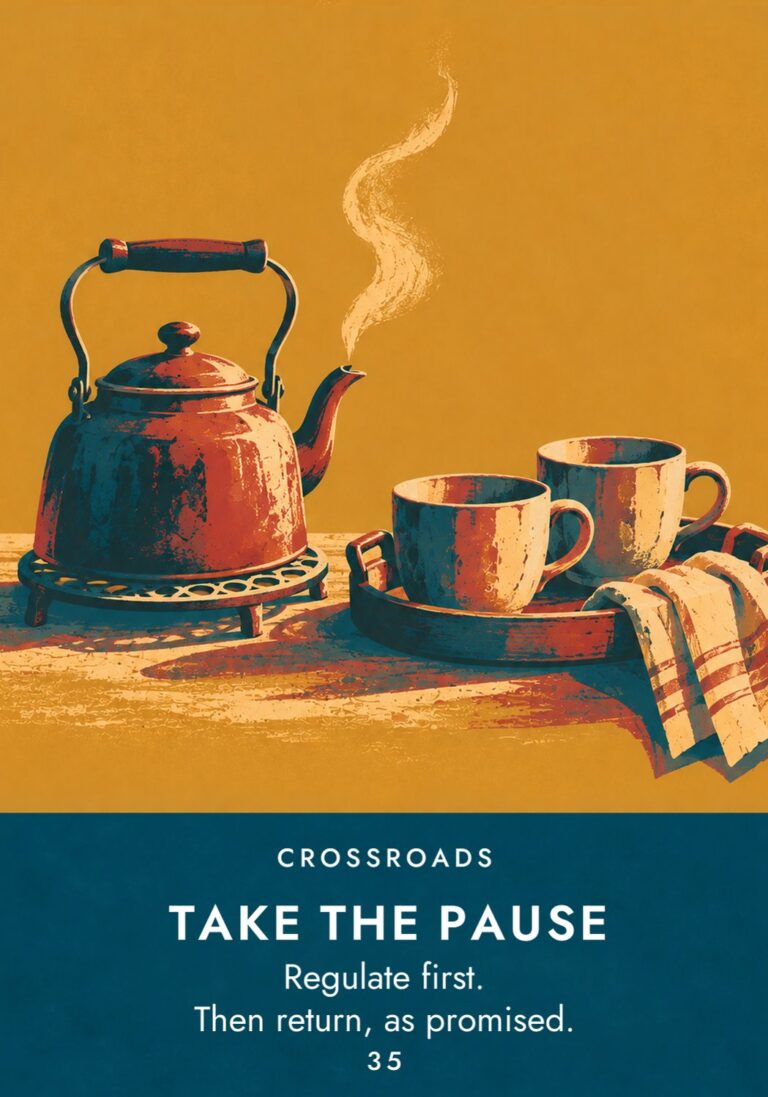
2 · Their Move
Regulate first. Then return, as promised.
Their Move is the door, and the camera version is this: he left the room without saying when he would be back. The card describes shutting down when a body is past the point where a useful conversation is possible, and it describes a communicated pause with a return time as the alternative. What I saw was the leaving, not the pause. What it was protecting him from is a hypothesis, and the card does not let me file it as a fact. The edge, read from my side, is disappearing without a clock, and from his side it would be my refusal to let a pause happen at all.
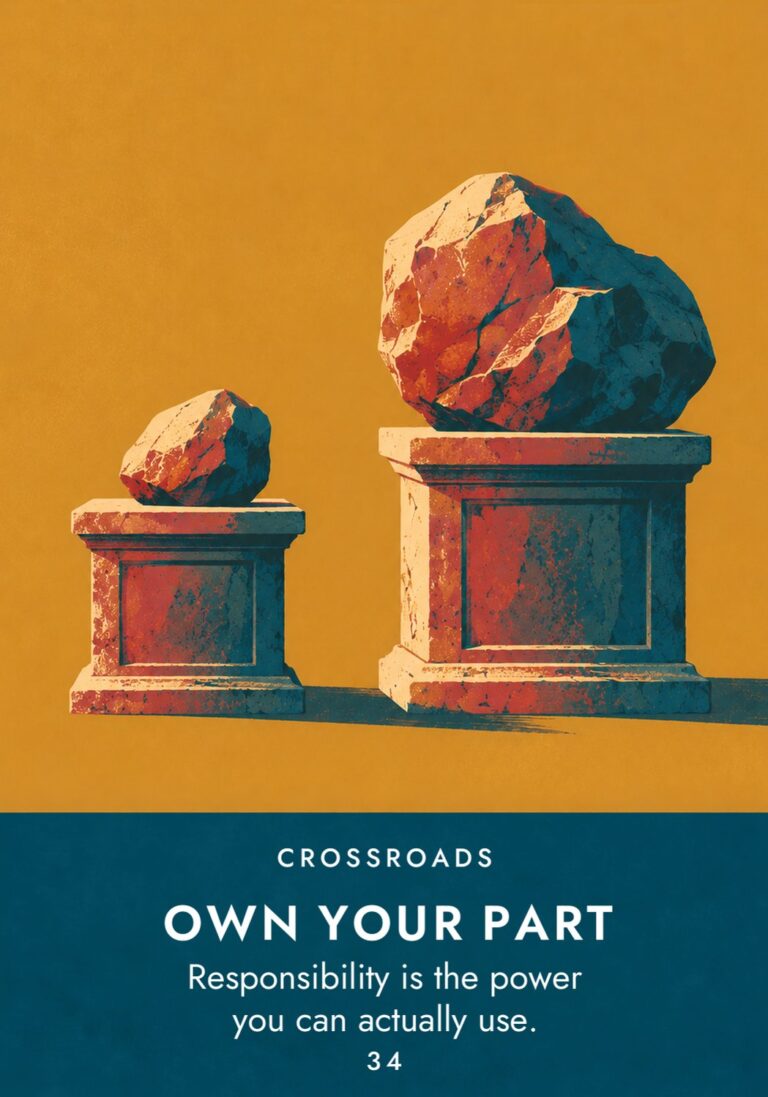
3 · The One Step I Can Change
Responsibility is the power you can actually use.
The One Step I Can Change is the opening sentence and the file. The card asks for the useful fraction, not the whole fight, and the fraction here is plain: I opened with a verdict and escalated with history. The smaller version is one sentence written before I speak, event and feeling and request, with the wedding left out of it. The card also insists on the second sentence, what I am not taking on, and that is the door with no return time. That part is his. The edge would be owning everything to make it stop, which I have done before and which teaches nobody anything.
Read together
My move is the verdict and then the file. His move, as seen, is the door with no clock on it. My one step is the first sentence, written in advance, with the history left out. Nothing here says what he was protecting or whether he will pause differently next time. It says the loop has a joint that is mine, and that I can change that joint before the next plan changes.
If you have had this fight five times and it has the same shape every time, lay the three cards now. The reading tool below lays these same three positions with The Second Question.