Use this spread when
I lay this one after a reaction I cannot fully account for. A remark in a meeting, a tone in a text, and two days later I am still composing replies. The spread does not tell me I overreacted. It asks what the small thing landed on, and what, out of all of that, is mine to look at.
How to lay it
- Hold the question loosely. "What did that land on?" works better than "Why did they do that?"
- Write the trigger in one sentence at its true size. If it looks too small on paper, keep it that size.
- Shuffle and lay three cards face down, left to right.
- Turn What Set Me Off and check it against your sentence. Then turn What It Touched and write down the first old memory that arrives, without arguing with it.
- Turn What Is Mine to Look At last. Read the three together, then close the reading with something ordinary. This spread can open more than one evening should carry.
What each position means
- 1What Set Me OffThe trigger itself, named at its actual size, before the story grew around it.
I write the event at its real dimensions and resist making it bigger to justify what followed. If it seems too small for what happened next, that is not a mistake. That is the reading.
- 2What It TouchedThe older thing the trigger landed on: a rule, a wound, a voice, a room from years ago.
The middle card is where the size comes from. A small remark is only a match, and this position names the dry material it fell on. Usually it is old, and usually it has a house and a person attached to it. I go gently here, because this card can open more than an evening can hold.
- 3What Is Mine to Look AtThe part of the reaction you can actually work, separated from what belongs to the other person.
Not the whole reaction. The workable part. The other person may have been rude, and the card lets that stand. This position finds what I am adding, which is nearly always the piece with a history.
A worked example with Gold in the Dark
Here is how the spread reads with three cards from The Gold in the Dark. Suppose I am wondering why a colleague saying "you can be a bit intense" in a meeting has kept me awake for two nights, and the three cards are The One You Can't Stand, House Rules, and Your Share.

1 · What Set Me Off
The trait you cannot tolerate in them is rarely a stranger to you.
What set me off was not the word. It was the person, and the card explains the proportion: this colleague's whole way of being in a room makes me tighten, and the tightening is doing double duty. I am seeing something real about her, and meeting something of mine I have refused to house. One word for the trait: hers is casual. Mine, apparently, is intense.
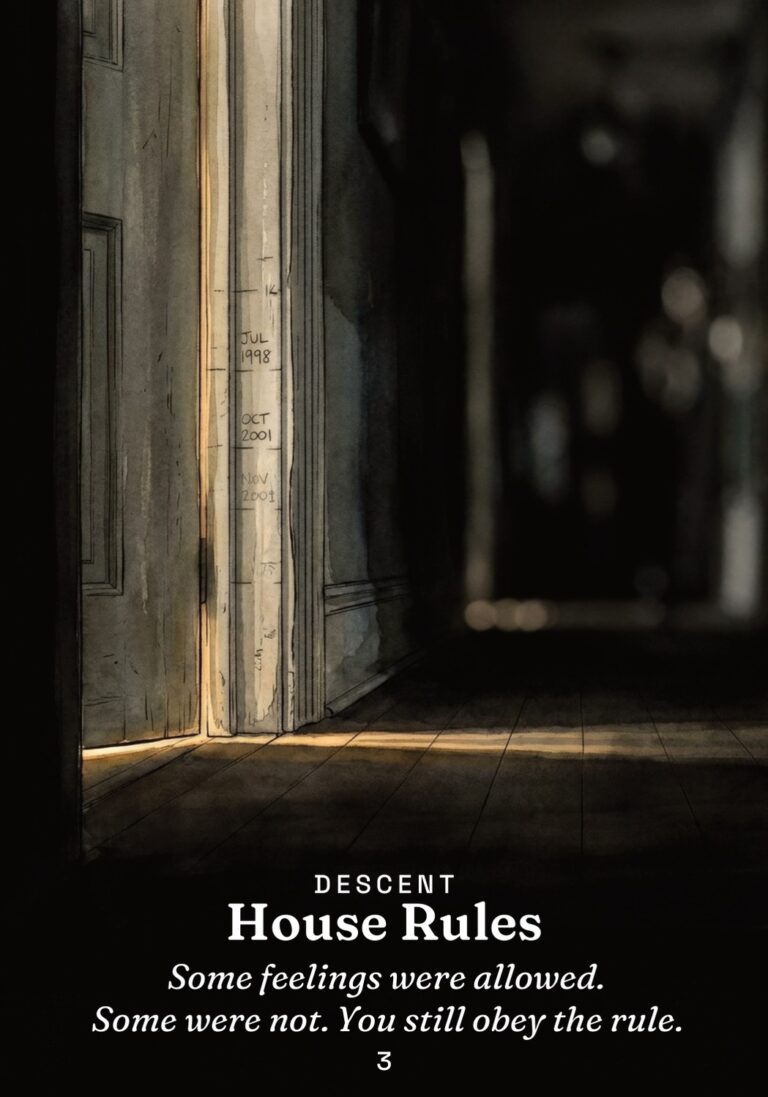
2 · What It Touched
Some feelings were allowed. Some were not. You still obey the rule.
What it touched is a rule. The card names the quiet licensing system every family runs, and in mine, intensity was expensive. Wanting things visibly was embarrassing, and being difficult was the one unforgivable offense. The remark did not hurt because it was true. It hurt because a rule I never agreed to said it was a verdict.
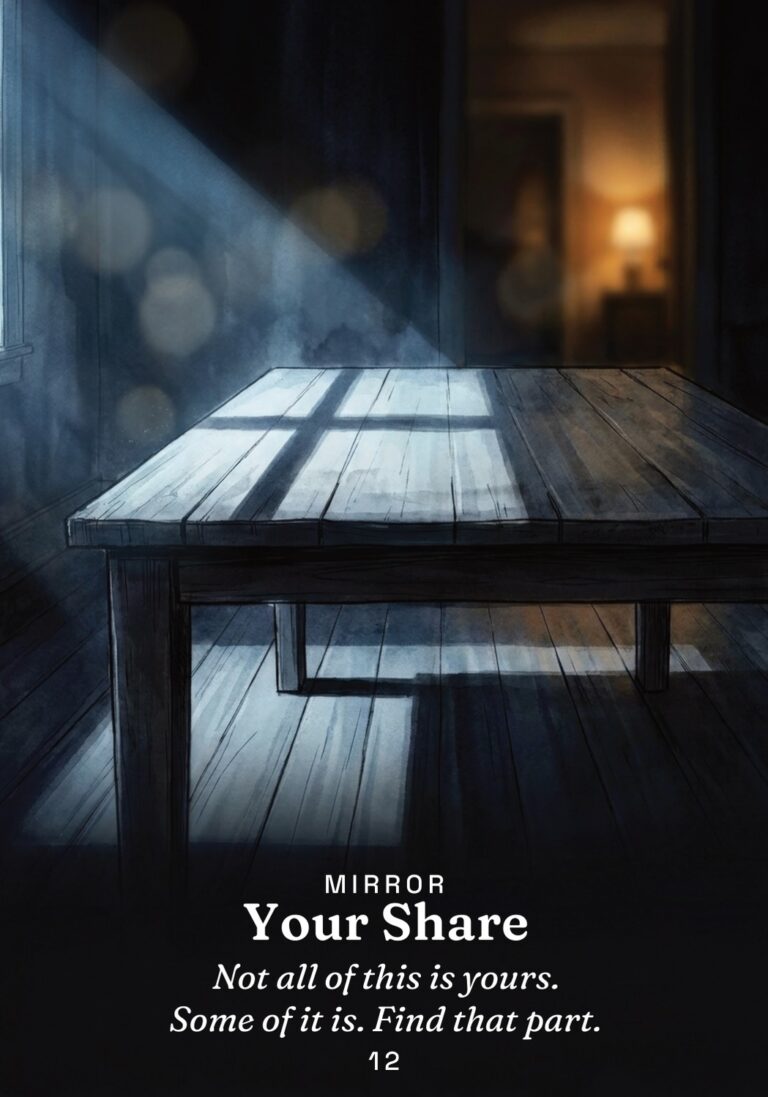
3 · What Is Mine to Look At
Not all of this is yours. Some of it is. Find that part.
What is mine to look at is the addition, and the card is strict about the sort. She said a careless thing in front of people, and that is hers. What I added was two nights of an old ache and a meaning that arrived faster than the facts. Only the second half is mine to work, and the card says it is enough.
Read together
The match was one careless word from a person I already find difficult. It fell on a family rule about not being too much, and that rule, not the colleague, is what kept me awake. Her part is a remark I can raise with her in one sentence. My part is the rule, and retiring it in one place is a better use of the week than a third night of replies.
If something small set you off and you are still not over it, lay the three cards now. The reading tool below lays these same three positions with The Gold in the Dark.