Use this spread when
I lay this one for the person who gets to me far past what they have done. Not the one who wronged me, which is a simpler thing. The one whose way of standing in a room makes me tighten. The spread holds that I am seeing something real about them and also meeting something of mine, and it insists on both. Then it asks the only useful follow-up: what changes now.
How to lay it
- Hold the question loosely. "What is this reaction about?" works better than "What is wrong with them?"
- Before you shuffle, name the trait in one word. Write it down, then write the kinder synonym you would use for yourself.
- Shuffle and lay three cards face down, left to right.
- Turn What I Cannot Stand in Them and check it against your word. Then turn Where It Lives in Me and write down when showing that trait last cost you something.
- Turn What Changes last and read the three together. End with one concrete move, with them or with yourself, and keep both options open.
What each position means
- 1What I Cannot Stand in ThemThe specific trait, named in one word, not the whole person.
One word, not a character sketch. Loud. Needy. Smug. Careless. This card tends to sharpen a vague dislike into a single trait, and I check whether my word is fair or already an insult, because the insult is usually where the reading is hiding.
- 2Where It Lives in MeThe form that same trait takes in you, usually under a more flattering name.
The uncomfortable middle. I do not have to be secretly the same as them. More often I once showed a small version of the trait and paid for it, and have been enforcing the ban ever since. This card finds the trait in me under its nicer synonym.
- 3What ChangesWhat you do differently once the projection is named: with them, or with yourself.
This card keeps the spread from ending in a shrug. Sometimes the change is a smaller version of the trait, tried on purpose. Sometimes it is a plainer conversation with the person, since a mirror can still be behaving badly.
A worked example with Gold in the Dark
Here is how the spread reads with three cards from The Gold in the Dark. Suppose I am wondering why a new neighbor who talks about her own plans at every opportunity has become the most irritating person in my week, and the three cards are The Shamed Appetite, What Envy Points At, and One Face.

1 · What I Cannot Stand in Them
The want you keep apologizing for is not the problem you think it is.
What I cannot stand in her is appetite, said plainly. She wants things out loud, the bigger garden and the trip and the second business, and she says so without the apparatus. The card turns that back on me at once: I have a want I have never said plainly, and a whole apparatus built around it. Her wanting is not the failure. My apparatus is.
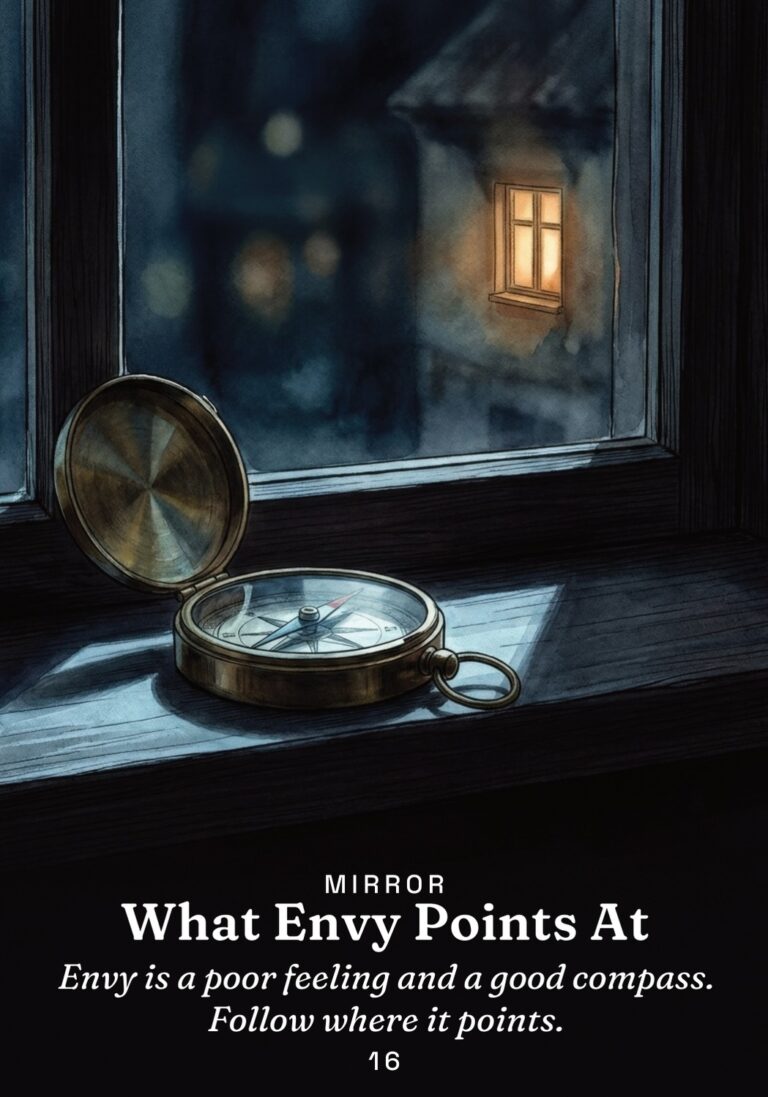
2 · Where It Lives in Me
Envy is a poor feeling and a good compass. Follow where it points.
Where it lives in me is envy, and the card is generous about that. Envy is the least dignified feeling available and the most informative, a needle rather than a character flaw. The question is not whether I am a bad person for feeling it. It is what, specifically, she has. Not her life. The one thing: she says the wanting out loud and survives it.
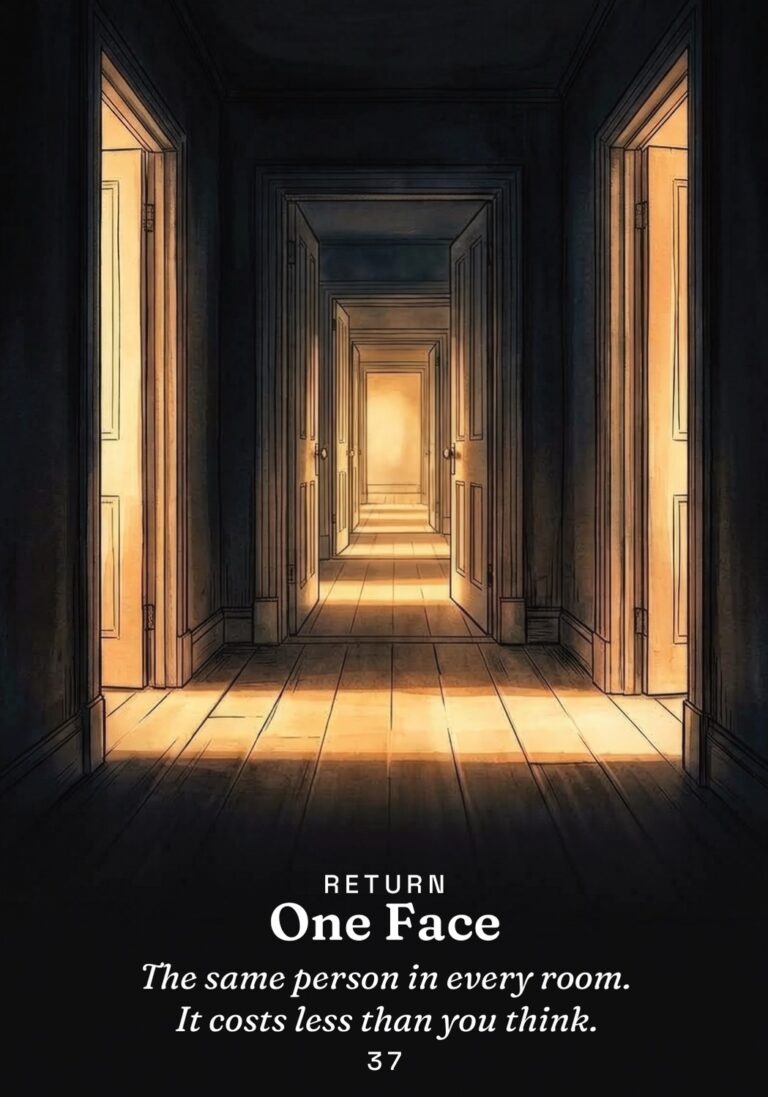
3 · What Changes
The same person in every room. It costs less than you think.
What changes is a room. The card asks how many versions of me I am running, and the honest answer is that the one who wants things only exists in the car. It suggests a modest experiment: the safest room I have, and one want said plainly in it, to one person.
Read together
She is not the problem and she is not only a mirror. She is loud about wanting, and I have been running an apology machine for years to avoid being. The envy is a compass, and it points at one specific act: saying one want out loud, in one room, without the joke. The neighbor can keep talking. I will be busy.
If someone gets under your skin far out of proportion, lay the three cards now. The reading tool below lays these same three positions with The Gold in the Dark.